Sourcing · China plus one
Nepal vs. Bangladesh vs. India for knit basics: a 2026 sourcing comparison
A practical comparison for brands and importers choosing where to make t-shirts and polos in 2026 — on duty access, tariffs, MOQ, and supply-chain risk.
With brands diversifying their apparel sourcing, the question “where should we make our knit basics?” is live again. Here’s a practical, honest comparison of three South-Asian options for tees and polos.
Which of Nepal, Bangladesh and India gets duty-free access to your market?
This is where Nepal stands out. As an LDC, Nepal enters the EU, UK, and Canada duty-free under single-transformation rules, and Bangladesh, also an LDC, enjoys the same access. India enters the UK at 0% but pays 9.6% on cotton knit tops into the EU and 18% into Canada. None of the three has duty-free US access for knit apparel.
India’s 9.6% into the EU is standard GSP duty (the EU–India trade agreement is concluded but not in force), and its 0% into the UK applies since 15 July 2026 under the UK–India CETA. Bangladesh, like Nepal, graduates from LDC status in the same window.
For US buyers the picture is different: none of these three has duty-free US access for knit apparel, so the comparison there comes down to MFN rates plus current trade measures: as of 24 September 2026 Nepal pays 16.5% MFN only on cotton T-shirts, while Bangladesh and India pay an extra 10% under Section 301. It’s a fast-moving picture that your customs broker should price before each order.
| Nepal | Bangladesh | India | |
|---|---|---|---|
| Duty into EU | 0% (EBA) | 0% (EBA) | 9.6% (standard GSP) |
| Duty into UK | 0% (DCTS) | 0% (DCTS) | 0% (UK–India CETA, since 15 Jul 2026) |
| Duty into Canada | 0% (LDCT) | 0% (LDCT) | 18% MFN |
| Garment minimum wage | NPR 19,550/month (since Jul 2025) | Set nationally for the garment sector | Set by each state |
| Typical knit MOQ per style (industry norms) | 200 pcs at our factory (1,000 per order) | 3,000–10,000 pcs | 1,000–5,000 pcs |
| Sea freight | Via Kolkata (landlocked, +1–2 wks) | Chittagong — own port | Own ports |
Read that wage row honestly: Nepal is not cheaper than Bangladesh, and any pitch built on beating Dhaka on price is fantasy. The rows that decide real sourcing choices are MOQ and duty-by-market — which is why the same brand can rationally use Bangladesh for its volume core and Nepal for the styles it wants to test, grow, or keep close.
How do Bangladesh and India compare with Nepal on scale and attention?
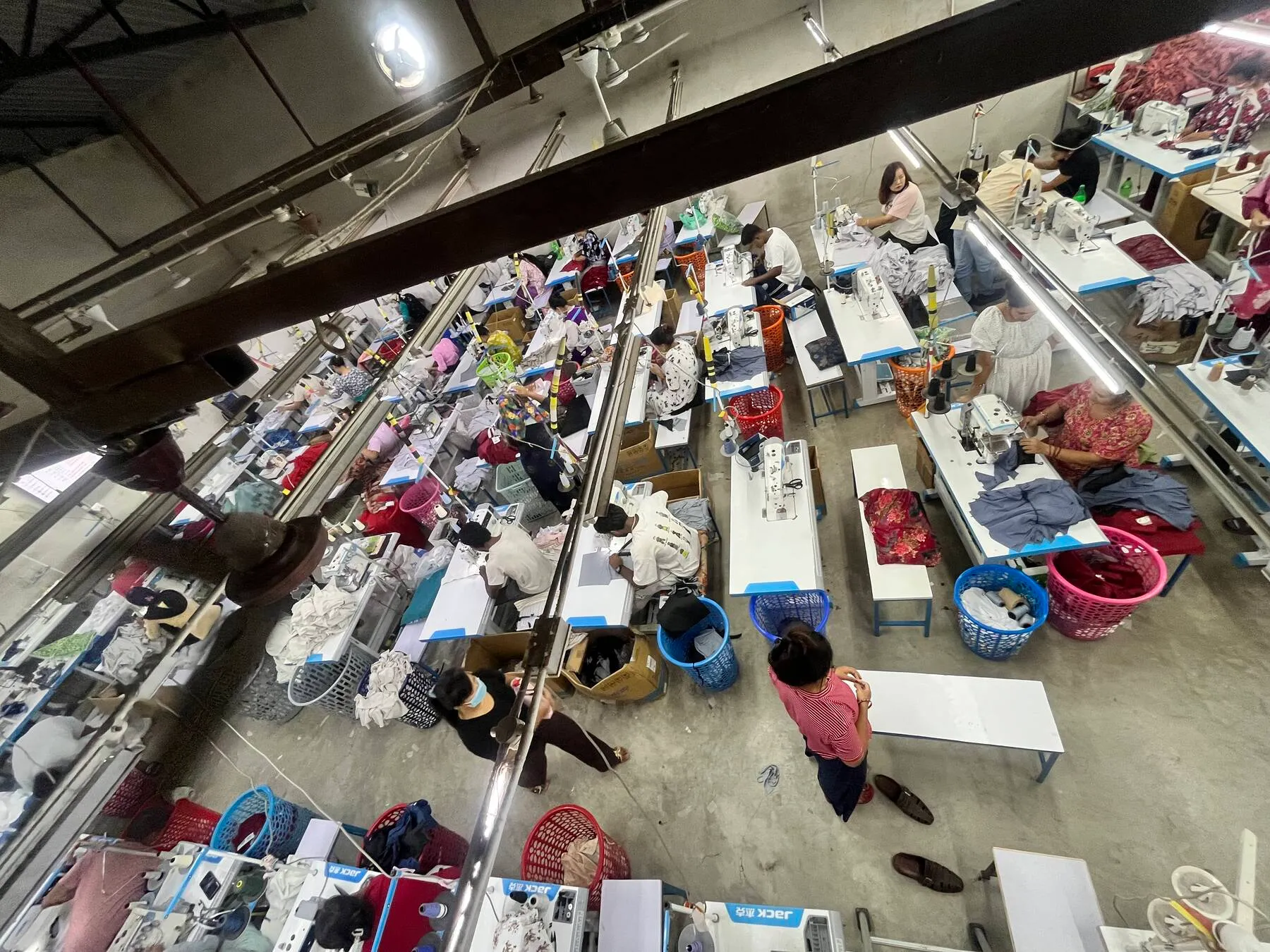
Bangladesh and India are giants — enormous capacity, but their factories are built around large buyers and big minimums. Emerging and mid-size brands often struggle to get attention, low MOQs, or responsive communication. Nepal’s industry is smaller and less overbooked, which for the right buyer means dedicated capacity, lower minimums, and direct access to the people running your order.
Which country suits small knit batches of a few hundred to 2,000 pieces per style?
If you need a few hundred to 2,000 pieces per style rather than a container per colourway, a mega-factory in Dhaka or Tiruppur is rarely the right fit — their economics start at 3,000 pieces and climb. Our factory runs real full-package production from 200 pieces per style and colour (1,000 per order), which matches how most growing brands actually buy. Where the MOQ tiers honestly sit.
What are the downsides of sourcing knit basics from Nepal?
Nepal has three honest trade-offs. It is landlocked, so bulk sea freight routes via Kolkata or Vizag and lead times need realistic planning. Its industry is smaller, with fewer giant factories, which suits small-to-mid programmes rather than 100k-piece single orders. And fabric is often imported, which is fine for duty-free access under single transformation.
- Landlocked — bulk sea freight routes via Kolkata/Vizag, so plan realistic lead times.
- Smaller industry — fewer giant factories; best for small-to-mid programs, not 100k-piece single orders.
- Fabric is often imported — which is fine for duty-free under single transformation, but worth understanding.
Who should consider sourcing knit basics from Nepal?
Nepal is a strong fit if you’re a brand, importer, or reseller selling into the EU/UK/Canada (where duty-free access is the real prize), you value low MOQ and a responsive partner over raw scale, and you’re diversifying away from over-concentration in China, India, or Bangladesh.
That’s exactly the lane we work in at our garment factory in Nepal — private-label knit basics, low MOQ, duty-free-savvy. Comparing further afield? Nepal vs Pakistan and the full country comparison continue the honest series. See what we make or start a conversation.
Want the numbers side by side, with a source for every cell? See our Nepal vs Bangladesh vs India comparison table.
Frequently asked
Is Nepal cheaper than Bangladesh for garments?
Which country has the lowest MOQ for knitwear?
Do India and Bangladesh get duty-free access to the EU and UK?
About the author
Santosh Rijal runs Trishakti Apparel, the export knitwear factory his family built on three decades in Nepal’s fashion trade. He writes about sourcing, duty and production from the factory floor in Gaindakot.
LinkedIn ↗