Private label · How to
Private-label branding & retail-ready packaging for your knitwear
What goes into a private-label trim and packing pack for knitwear – brand, size, care and origin labels, hangtags, barcodes, polybags and carton marks – which parts the law sets and which your retailer sets, what you supply versus what the factory sources, the artwork and approvals a factory needs, and the mistakes that delay shipments.
Private label means the garment ships as your brand, not a blank. That takes a set of small parts, each with its own artwork, supplier, approval and deadline. Get them organised and the goods arrive ready for the shelf or the warehouse. Get one wrong and a finished order can wait for a label. This guide covers what goes into a private-label pack for knitwear, which parts the law sets and which your customer sets, who supplies what, and how to avoid the common delays.
What does a private-label pack for knitwear contain?
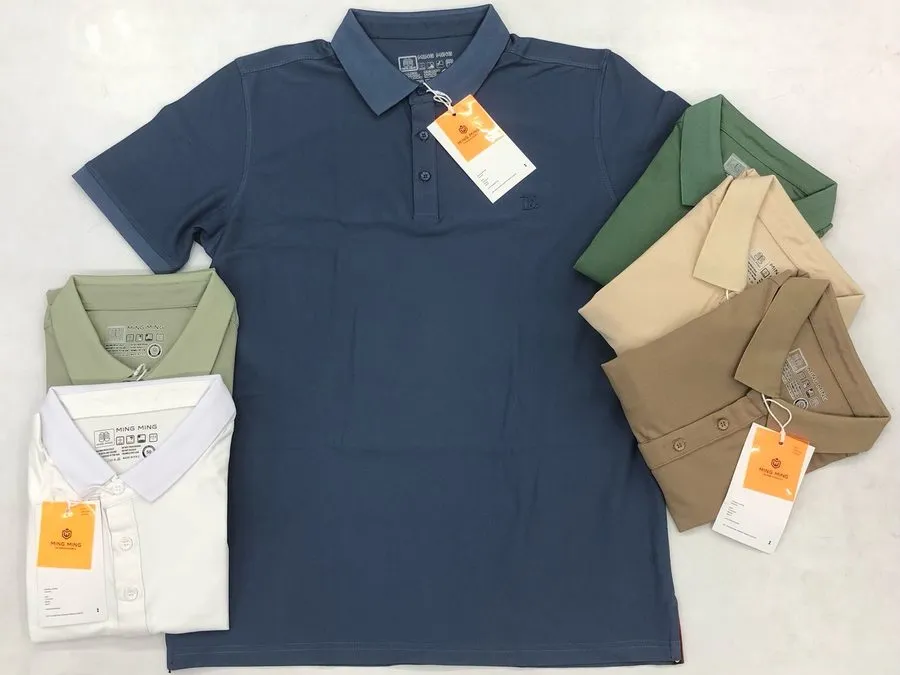
A private-label pack covers the main brand label, size label, care and composition label, origin marking, hangtag or swing ticket, barcodes (GTINs), polybag, and carton marks and packing, plus extras such as tissue, stickers, inserts and branded mailers. Some items are set by law in each market; the rest by you, your retailer, marketplace or warehouse.
| Item | What it does | Usually set by |
|---|---|---|
| Main brand label | Your logo at the neck: woven, printed, or a tagless neck print | You |
| Size label | Size, often combined with the brand label or as a separate tab | You |
| Care and composition label | Fibre content and care instructions, in the languages of each market | The law in each market, plus you |
| Origin marking | “Made in Nepal”, on the label where a market requires it | The law in each market |
| Hangtag or swing ticket | Brand story, price, size and barcode, with its fastener | You or your retailer |
| Barcode (GTIN) | Identifies each size and colour at the till and in the warehouse; on the hangtag, polybag or both | You, from your GS1 numbers |
| Polybag | Protects the folded garment; may carry a warning, size sticker and barcode | Your retailer or marketplace |
| Carton marks and packing | Carton labels, ratio or solid-size packing, carton size and weight | Your retailer or warehouse |
| Extras | Tissue, stickers, inserts, branded mailers | You |
Which label content does the law set, and which does your retailer set?
Some of what goes on a garment is set by law in the market of sale; the rest is set by your retailer, marketplace or warehouse. The rules differ by market, so treat this as an overview and use our guide to label requirements in the EU, UK, US and Canada for detail.
- EU: textile products must be labelled with their fibre composition, on a label that is durable, legible, visible and securely attached, in the official language or languages of the member state where they are sold. A distributor that places a product on the market under its own name or trademark is treated as the manufacturer under the regulation.
- UK: the label must show the fibre content, and manufacturers and retailers are responsible for complying.
- US: fibre content, country of origin and the identity of the business, in English. On garments with a neck, origin goes on a label at or near the inside centre of the neck. Care labels are required, attached permanently and legible for the useful life of the product. RNs (registered identification numbers) are issued only to US businesses.
- Canada: fibre content for each fibre of 5% or more in English and French, plus a dealer identity: a name and postal address or a CA number. Care labelling is voluntary, and the Competition Bureau says country of origin is not required under textile labelling law unless you identify the item as imported; ask your broker about customs marking rules.
The fibre composition on the label must match the fabric actually used, so confirm it from the booked fabric, not from the enquiry.
Packaging can bring its own duties. In Germany, for example, anyone distributing packaged goods there must be registered in the LUCID packaging register. Polybag suffocation warnings, recycling marks and carton rules are often set by your retailer or marketplace, and some places regulate them; check your customer’s packaging manual and local rules before you order polybags.
This is a practical overview, not legal advice. Confirm the current rules for each market you sell in.
Should you supply your own trims or let the factory source them?
Either works, and many buyers mix the two models. Supplying trims yourself gives the tightest brand control and suits buyers who run more than one factory, but you manage delivery to the factory and their value counts in your customs value. Letting the factory source them to your artwork is simpler logistically, but you approve physical samples before bulk.
| You supply the trims | The factory sources to your artwork | |
|---|---|---|
| Control | Highest: same trims at every factory | You approve physical samples before bulk |
| Logistics | You ship trims to the factory and track them | Handled by the factory |
| Multi-factory programmes | Easier to keep identical | Each factory needs the same artwork and approvals |
| Customs value | Labels and tags you supply free count in the customs value | Included in the garment price |
The customs point is easy to miss. UK guidance, for example, lists price tags and labels among buyer-supplied items whose value must be added to the customs value if the invoice price does not already include it. Tell your broker what you supplied and what it cost.
Whichever model you choose, three things always come from you: the artwork, the approved wording for care and composition, and the barcode numbers.
Can the factory create barcodes for your products?
The factory can print and apply them, but the numbers should be yours. A GTIN is built from the brand owner’s GS1 company prefix, and each size, colour and style variation needs its own. Trading partners can check who owns a GTIN in the GS1 database, so use numbers licensed to your company.
Send them as a spreadsheet of style, colour, size and GTIN, not as images, and have your inspector scan a sample of packed goods.
What artwork and approvals does a factory need for private-label trims?
For each trim, a factory needs vector artwork at actual size, Pantone colour references, size, fold and fixing details, placement from a fixed point, final care and composition text per market, and packing instructions. Approval then runs in order: artwork proof, physical trim samples, trims on the pre-production sample, and a signed trim card.
A factory needs, for each item:
- Vector artwork (AI, EPS or PDF with outlined fonts) at actual size.
- Colours as Pantone references, not screen colours.
- Size, fold and fixing: end fold, centre fold or loop label, and whether it is sewn into a seam or on all sides.
- Placement from a fixed point, for example “centre back, 2 cm below the neck seam” (an illustration, not a standard).
- Final text for care and composition, per market and language.
- Packing instructions: fold size, polybag size, what goes in and on the bag, pieces per carton, size ratio and carton-mark layout.
Then approve in order: artwork proof, physical trim samples, trims on the pre-production sample, and a signed trim card that travels with the order. Every change after approval is a new, dated version. Approving by chat message is how the wrong label reaches bulk.
What lead times and minimums apply to custom trims?
Custom trims have their own minimums and lead times, set by the trim supplier and the product: woven labels, printed hangtags and custom polybags all differ. Ask for them when you request a quote, and plan the order of events:
- Sewn-in labels are on the critical path, because they must be at the factory before sewing starts.
- Hangtags, polybags and carton labels are needed at finishing and packing, a little later.
- Order custom trims while the sample is made, once the artwork is approved, rather than after sample approval.
- For samples, stock or printed stand-in labels are usually fine, so the fit review does not wait for custom trims.
Which private-label mistakes delay shipments?
Common mistakes include composition printed from the enquiry rather than the booked fabric, labels missing the languages a market needs, barcodes sent as images or one GTIN reused across colours or sizes, unspecified hangtag details, labels arriving after cutting, which holds the whole order, and supplied trims left out of the customs value.
- Composition printed from the enquiry, not the booked fabric, such as 100% cotton on a CVC blend.
- One label set for several markets without the languages each needs.
- Origin marking shared across factories in different countries. How to run two sources cleanly.
- Barcodes sent as images, or one GTIN reused across colours or sizes.
- Hangtag position, fastener and attachment point not specified.
- Labels arriving after cutting, which holds the whole order.
- Supplied trims left out of the customs value.
If you are relabelling ready-made blanks rather than ordering made to spec, the rules shift; see relabelling blank garments under your own brand.
How does Trishakti Apparel handle private label?
Private-label finishing is part of our process: your woven labels, care labels, hangtags, size and composition marking, and retail-ready packaging, ratio-packed and carton-marked to your spec. Trims can come from you or be sourced to your artwork. Tagless neck prints are applied through our partner decorators.
Our sample kit includes a woven neck label, a printed care label and a hangtag, so you can see the finish before you order. The minimum is 200 pieces per style and colour, with 1,000 pieces in total per order, split across sizes. Send your branding brief and we will tell you what we need to quote it.
Frequently asked
Should I supply my own labels and hangtags or let the factory source them?
Can the factory create barcodes for my products?
Is a printed neck label allowed instead of a sewn one?
When do labels need to arrive at the factory?
About the author
Santosh Rijal runs Trishakti Apparel, the export knitwear factory his family built on three decades in Nepal’s fashion trade. He writes about sourcing, duty and production from the factory floor in Gaindakot.
LinkedIn ↗