Quality · Sourcing
Single jersey vs interlock vs piqué: knit constructions explained for buyers
The three knit constructions behind almost every tee and polo: how each is made, what it does to weight, stretch, print quality and cost, the curling-and-twisting quirks factories manage, and which construction fits which product.
Nearly every knit tee, polo, and base layer is built on one of three constructions, and that choice fixes the garment’s weight, drape, stability, print surface, and price before any design work begins. What follows is the buyer’s version, including the quirks each construction brings and how a competent factory manages them.
| Single jersey | Interlock | Piqué | |
|---|---|---|---|
| Structure | One layer | Double-knit, two locked layers | Tuck-stitch texture |
| Faces | Smooth front, looped back | Smooth both sides | Waffle face |
| Typical GSM | 140–200 | 180–240 | 180–240 |
| Character | Light, drapey, economical | Stable, substantial, premium | Breathable, structured, uniform-grade |
| Prints | Very well (flat face) | Very well | Bold designs only, texture breaks fine detail |
| Embroidery | Needs stabilising | Excellent | Excellent, texture hides needlework |
| Quirks | Edge curl, spirality | Heavier, costlier | Costs more than jersey |
Which knit construction suits which product?
Single jersey is for t-shirts, interlock for premium polos, kids’ basics and garments that must hold shape through industrial washing, and piqué for polos and uniforms. Jersey gives the best drape-to-cost ratio in knitwear, interlock is smooth on both faces and dimensionally stable, and piqué is breathable and embroidery-friendly.
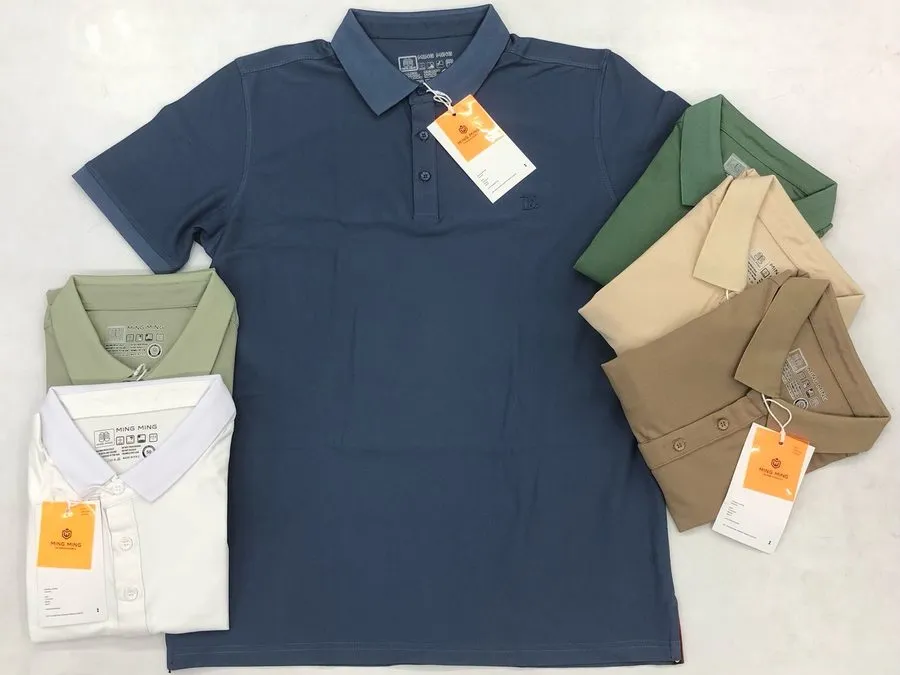
- Single jersey is the t-shirt: the best drape-to-cost ratio in knitwear. Its edge-curl is handled in cutting; its twist risk is a mill-control issue you spec, not luck.
- Interlock is the premium option: smooth on both faces, opaque at lighter weights, dimensionally stable, the choice for premium polos, kids’ basics, and garments that must hold shape through industrial washing.
- Piqué is the polo: breathable texture, embroidery-friendly, professional. The full polo guide covers it in depth.
Which spec lines prevent knit fabric problems?
Whatever construction you choose, three lines in the tech pack prevent 90% of knit problems: GSM with a tolerance (±5%), shrinkage limit after wash (±5% or better, on compacted fabric), and spirality limit for single jersey. Then wash the sample before approving it — here’s the full approval checklist.
Need these fabrics made into T-shirts or polos? We cut and sew all three constructions from 200 pieces per style and colour (1,000 per order) — send a tech pack or tell us the product and we’ll recommend the construction with reasons, not just a price.
Frequently asked
What is the difference between single jersey and interlock?
Is interlock better than jersey?
What is piqué fabric?
Why does single jersey twist after washing?
About the author
Santosh Rijal runs Trishakti Apparel, the export knitwear factory his family built on three decades in Nepal’s fashion trade. He writes about sourcing, duty and production from the factory floor in Gaindakot.
LinkedIn ↗