Sourcing · Quality
CVC vs TC vs 100% polyester for uniform programmes: the blend decision
The three fabric families uniform buyers choose between, cotton-rich CVC, poly-rich TC, and full polyester, compared on comfort, industrial washing, embroidery, colour life and cost, with plain guidance by role and industry.
Sooner or later a uniform programme comes down to one decision: the blend. It sets the comfort complaints you will field, how the year-three garments look, and a fair slice of the budget. Below are the three fabric families the way a factory sees them, which is to say ranked by what survives.
| CVC (cotton-rich) | TC (poly-rich) | 100% polyester | |
|---|---|---|---|
| Typical blend | 60/40 cotton-poly | 65/35 poly-cotton | 100% poly |
| Hand-feel | Closest to cotton | Serviceable | Synthetic, improving with brushed finishes |
| Industrial washing | Good | Very good | Best |
| Colour life | Good | Very good | Best, poly holds dye hardest |
| Breathability in heat | Best | Moderate | Wicks sweat but holds heat |
| Cost | Mid | Lowest | Low–mid |
Which blend suits which uniform role?
Choose by role, not by habit: CVC for customer-facing roles such as hotel fronts, retail and offices; TC for back-of-house, trades and logistics; and 100% polyester performance knits for active and outdoor roles such as delivery, sports and field teams. For schoolwear, the trade standard is 65/35 poly-cotton for polos and poly-rich sweats.
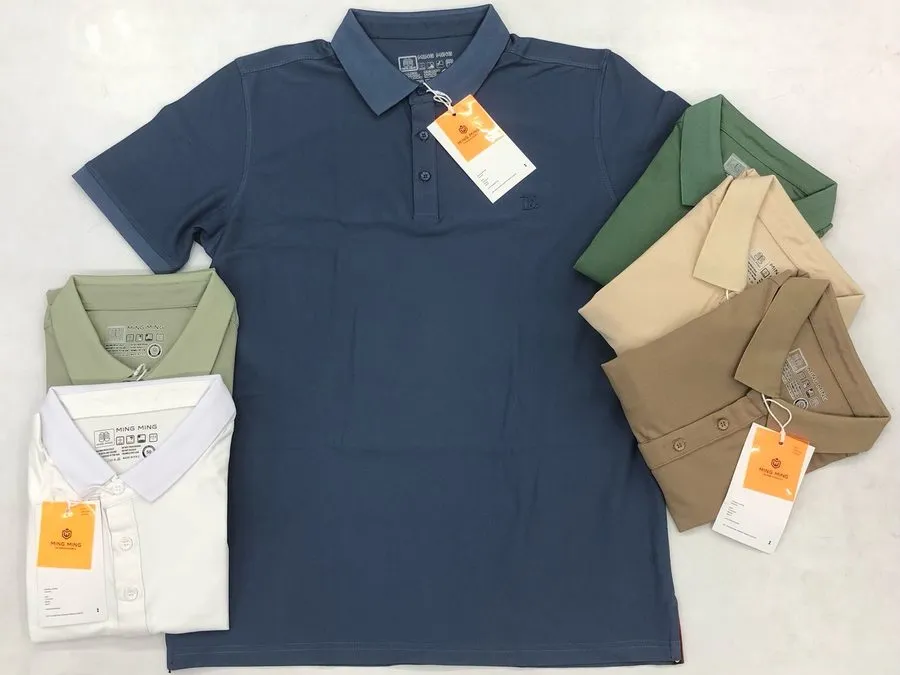
- Customer-facing (hotel fronts, retail, office): CVC — staff comfort shows on faces, and cotton hand reads premium.
- Back-of-house, trades, logistics: TC — it shrugs off hot washes and hard wear at the lowest price.
- Active/outdoor (delivery, sports, field teams): 100% polyester performance knits, wicking and colour-fastness win.
- Schoolwear: the trade standard is 65/35 poly-cotton for polos and poly-rich sweats, durability across a school year rules. The schoolwear guide.
What mistakes do uniform buyers make when choosing a blend?
First: choosing on swatch feel alone, the fabric that feels best on day one (lightweight cotton) is often the one that looks worst in month six. Second: forgetting reorder continuity — a uniform is a multi-year promise, so the blend and colour must be repeatable across dye lots and years.
Wash behaviour is the real spec: shrinkage tolerance, colour-fastness rating, pilling grade. Reorder continuity is a factory discipline: retained lab dips, recorded recipes, one dye lot per order. Our full uniform-programme guide covers it.
We make garments in all three families, from fabric knitted to your spec, from 200 pieces per style and colour (1,000 per order) — send your roles and wash reality and we’ll recommend blends per garment, with written tolerances.
Frequently asked
What is TC fabric?
Which is better for uniforms, CVC or TC?
Is 100% polyester good for work uniforms?
What blend is best for embroidered uniforms?
About the author
Santosh Rijal runs Trishakti Apparel, the export knitwear factory his family built on three decades in Nepal’s fashion trade. He writes about sourcing, duty and production from the factory floor in Gaindakot.
LinkedIn ↗