Sourcing · Pricing
Tirupur or Nepal? Where Indian brands should make their knitwear
An honest comparison for Indian brands choosing between a Tirupur (Tiruppur) knitwear unit and a factory in Nepal: tax, duty, minimum orders, fabric, lead time and delivery, with a checklist for comparing two quotes like for like.
Tirupur (also spelled Tiruppur) is where most Indian brands start when they need T-shirts, polos or hoodies made, and for good reason. A factory in Nepal is a newer option for Indian buyers. This guide compares the two honestly, so you can decide which fits each order, and shows how to compare two quotes on the same basis.
Why is Tirupur the default for Indian knitwear?
Tirupur, in Tamil Nadu, is India’s knitwear capital. Its exporters shipped a record Rs 46,000 crore of knitwear in 2025–26, nearly 60% of India’s knitwear exports, according to the Tiruppur Exporters’ Association. Knitting, dyeing, printing and stitching units sit within a short drive of each other, so a brand can find almost any fabric, finish or capacity there.
That is a real strength, and for many orders Tirupur is the right answer. The question is when a factory in Nepal is the better fit for a particular order.
Does tax or duty make Nepal cheaper or dearer?
Neither. For a GST-registered brand, the tax works out the same:
| Made in Tirupur | Made in Nepal, imported under the treaty | |
|---|---|---|
| Customs duty | None (domestic purchase) | 0% basic customs duty when the treaty’s origin rules are met |
| Tax on a garment up to Rs 2,500 | 5% GST | 5% IGST, on the customs value |
| Tax on a garment above Rs 2,500 | 18% GST | 18% IGST |
| Input tax credit | Normally available | Normally available |
| Paperwork | Tax invoice and e-way bill | Bill of entry, Nepali certificate of origin, an Importer-Exporter Code |
Since the GST changes of 22 September 2025, readymade garments pay 5% up to Rs 2,500 a piece and 18% above it, whether made in India or imported. Without the treaty, an imported cotton T-shirt would pay 20% basic customs duty (at least Rs 45 a piece) plus the 10% Social Welfare Surcharge on that duty. With it, that duty is 0%, so a qualifying garment from Nepal pays the same tax rate as one made in Tirupur.
So compare the price per piece, freight, clearance costs, minimum order and time. Tax is not where the difference lies.
When is Tirupur the better choice?
Be honest with yourself about these. Tirupur usually wins when:
- You need a very large run fast. The cluster’s capacity is far larger than any single factory.
- You want everything in one place: fabric development, dyeing, all-over printing and stitching, with your team visiting often.
- Your warehouse is in South or West India, where road freight from Tamil Nadu is short.
- You don’t want customs paperwork at all. Importing needs an Importer-Exporter Code, a customs agent and origin records, even at 0% duty.
When does a factory in Nepal make sense?
A Nepal factory is worth a quote when:
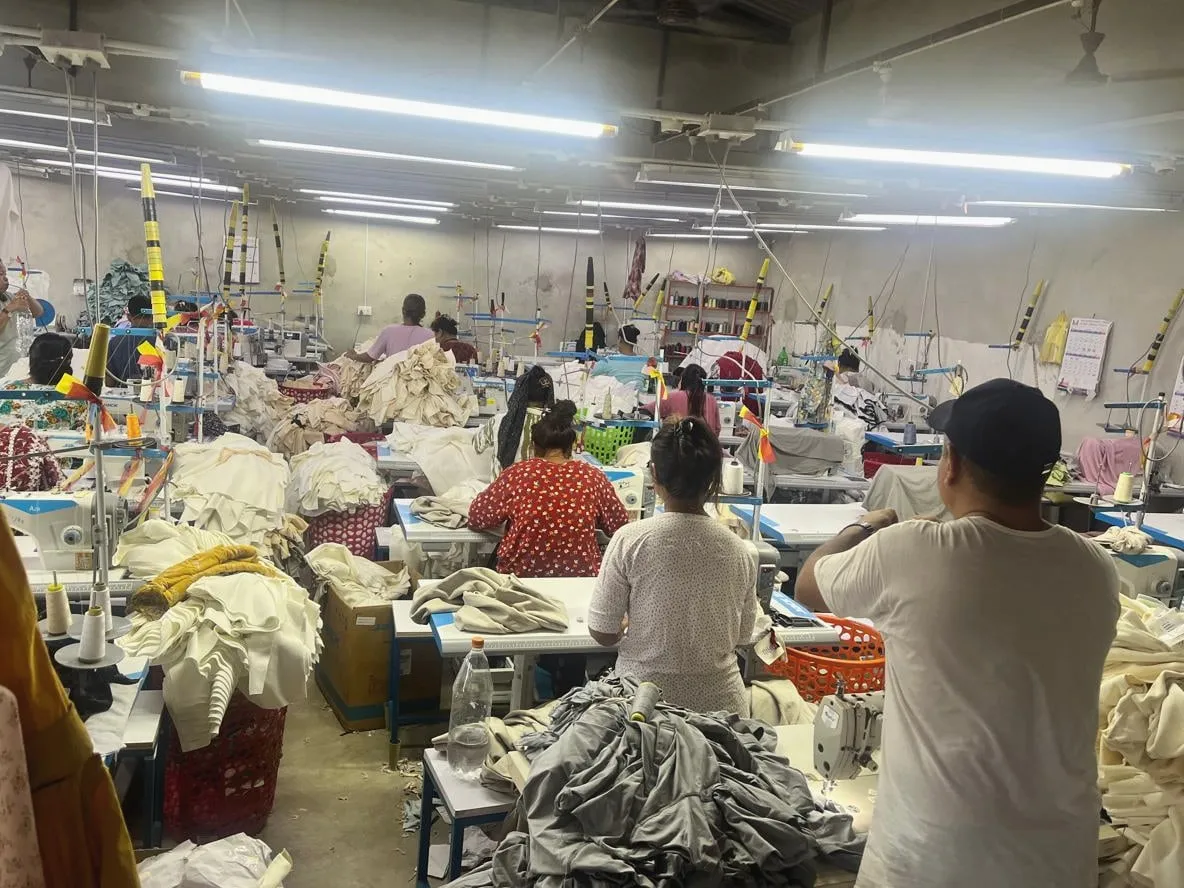
- Your warehouse or customers are in North or East India. Our factory in Gaindakot is about 3 hours by road from the Sunauli border, and we deliver to the border, or to your door in India within 10 days of dispatch.
- Your runs are small. We make 200 pieces per style and colour (1,000 per order), which suits new labels and colour tests.
- You want a second source. A factory outside your usual cluster keeps one strike, flood or peak season from stopping your launches.
- You want to keep your fabric. Materials from India count as local under the treaty, so we can make your garments in Indian fabric, including fabric from Tirupur mills, and the garment still qualifies for 0% duty.
- You pay in rupees. We accept INR or USD by bank transfer (TT), or a Letter of Credit. The Nepali rupee is pegged to the Indian rupee (₹100 = NPR 160), so there is no exchange-rate risk between the two currencies.
Our lead times: samples in 7–14 days, bulk dispatched 25–30 days after you approve the sample, then at your door in India within 10 days of dispatch.
How do you compare a Tirupur quote with a Nepal quote?
Put both quotes on the same basis before you compare the numbers:
- Same garment. Fabric composition, GSM with a tolerance, knit (single jersey, French terry, fleece), trims, labels and packing must match.
- Same delivery point. Ex-factory, at the border, or delivered to your warehouse. Add freight to whichever quote doesn’t include it.
- Clearance costs for the import. Add your customs agent’s fee for the bill of entry. Basic duty should be 0% for a qualifying garment.
- Tax. 5% GST or 5% IGST up to Rs 2,500 a piece, normally creditable either way. Check that neither quote has slipped tax into the unit price.
- Sampling. The cost of samples and how many rounds are included.
- Time. Sample time, bulk time and transit, counted to the day the goods reach your warehouse.
- Payment terms. Advance and balance, currency, and whether a Letter of Credit is possible.
To see the landed cost of an order from Nepal in rupees, use our Nepal to India import duty calculator. The origin rules are explained in our guide to the Nepal–India treaty for garments.
How do you start with Trishakti Apparel?
Send us your tech pack or a reference garment, the quantities per colour and your delivery city. We quote in rupees or dollars, make a sample in 7–14 days, and confirm each style against the treaty’s origin rule before quoting it duty-free. See how importing from Nepal to India works, step by step, or our page for Indian brands.
Frequently asked
Is it cheaper to make T-shirts in Tirupur or in Nepal?
Is there customs duty on garments from Nepal to India?
Can a Nepal factory use fabric from Tirupur?
What is the minimum order at Trishakti Apparel?
About the author
Santosh Rijal runs Trishakti Apparel, the export knitwear factory his family built on three decades in Nepal’s fashion trade. He writes about sourcing, duty and production from the factory floor in Gaindakot.
LinkedIn ↗