Sourcing · How to
How to import clothing from Nepal: a step-by-step buyer’s guide
Considering Nepal for your knit basics? A practical, step-by-step guide to importing garments from Nepal — from first inquiry to delivery, including duty-free access, export paperwork, freight, and payment.
If you’ve decided Nepal is worth a look for your knit basics — duty-free access to the EU, UK, and Canada, low minimums, and a partner who isn’t overbooked — the next question is simply: how does importing from Nepal actually work? Here’s the whole path, start to finish.
Why do buyers import knit basics from Nepal?
As a Least Developed Country, Nepal enters the EU, UK, and Canada at 0% import duty under single-transformation rules — even with imported fabric — versus roughly 12% MFN duty on a cotton knit t-shirt from most countries. Add genuinely low MOQs and dedicated capacity, and it’s a strong fit for growing brands.
For the US, Nepal carries among the lowest South-Asian tariffs. See the full duty breakdown.
How do I import clothing from Nepal, step by step?
Importing from Nepal follows seven steps: inquiry and quote, sampling, order and deposit, bulk production, quality control, export documents, and freight and delivery. You share your designs or tech pack, approve a sample, agree payment terms, and the factory handles export paperwork and the Certificate of Origin before shipping by sea or air.
-
- Inquiry & quote — share your designs, tech pack, or a reference, plus target quantities. You get fabric options, MOQ, pricing, and lead time.
-
- Sampling — the factory makes a sample to your spec; you review fit, fabric, and finish and revise until it’s approved.
-
- Order & deposit — approve the sample, confirm the PO, and agree payment terms (staged terms; Letters of Credit accepted for larger orders).
-
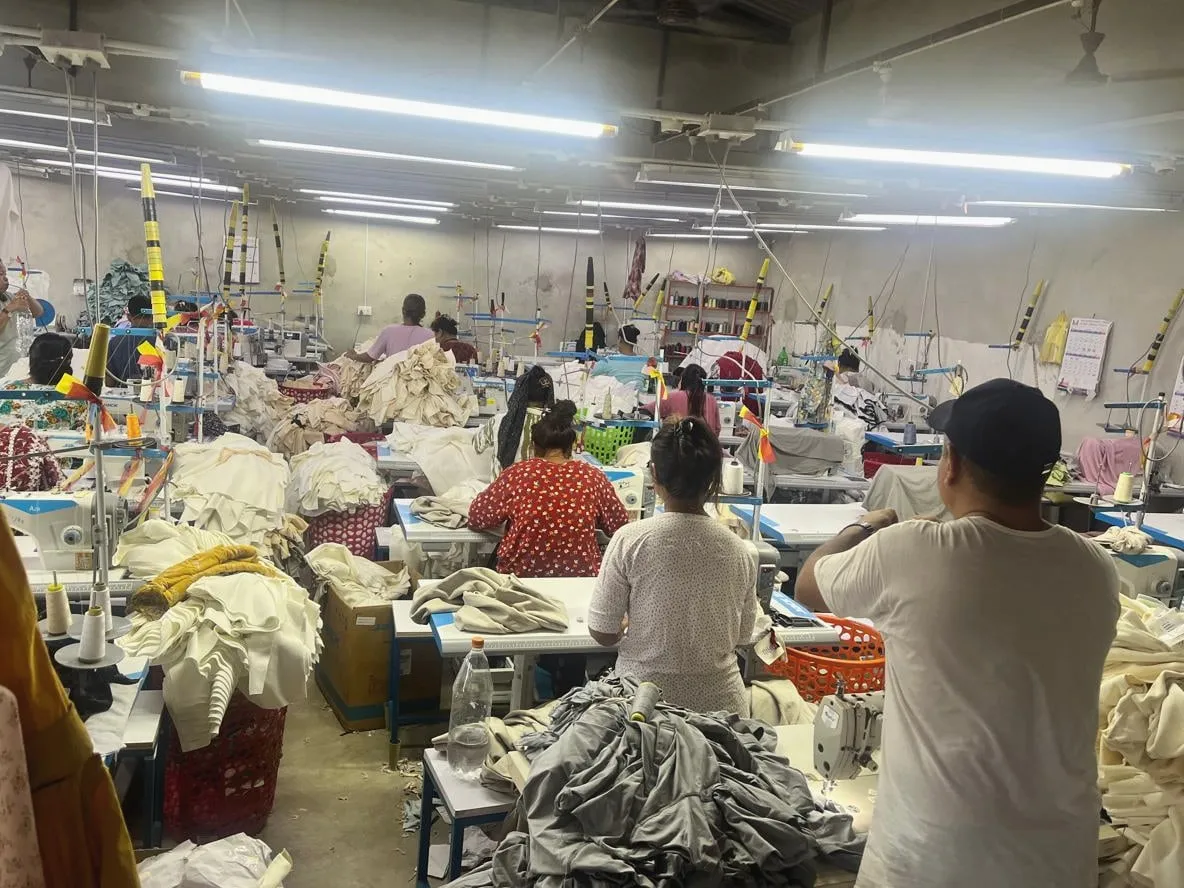
- Bulk production — the approved sample goes to the floor: cut, sew, and finish under in-line quality checks.
-
- Quality control — in-line and final inspection; buyer-appointed third-party inspection is welcome.
-
- Export documents — the factory handles export paperwork and supplies the Certificate of Origin for duty-free clearance.
-
- Freight & delivery — shipped by sea (via Indian ports) or air for samples and urgent runs, with duty management support.
What export paperwork do I need for duty-free entry?
A legitimate exporter holds an EXIM code and supplies a Certificate of Origin so your goods clear at the preferential LDC rate. For the EU, duty-free origin is increasingly self-certified through REX registration — ask your supplier whether they are registered. We are — our REX statement on origin goes on your invoice.
You can view and verify our REX number. The origin rule that makes this work is “single transformation” — cutting and sewing in Nepal is enough to qualify, even with imported fabric.
How is clothing shipped from landlocked Nepal?
Nepal is landlocked, so bulk sea freight routes overland to Indian ports (Kolkata / Visakhapatnam) before sailing. It’s a well-trodden path — the key is planning realistic lead times and using air only for samples or genuine urgency. Here’s how shipping from Nepal actually works.
How do I pay a new supplier safely on a first order?
Never wire 100% upfront to a new supplier. Standard practice is a deposit with the balance structured against inspection and shipping documents, or a Letter of Credit for larger orders. We work on staged terms. More on paying a factory safely.
That’s the whole journey. If your market is the EU, UK, Canada, or the US and you make knit basics, it’s worth a conversation. Tell us your product and destination and we’ll map it to our floor.
About the author
Santosh Rijal runs Trishakti Apparel, the export knitwear factory his family built on three decades in Nepal’s fashion trade. He writes about sourcing, duty and production from the factory floor in Gaindakot.
LinkedIn ↗