Duty-free · How to
Single vs. double transformation rules of origin, explained for apparel importers
Rules of origin decide whether your garment qualifies for a duty preference. Here’s the difference between single and double transformation, the actual EU, UK, Canadian and Japanese rules for knitwear, a worked duty example, and what changes after Nepal’s LDC graduation.
A duty preference asks two questions about your garment: where was it made, and how much of it was made there? Rules of origin answer the second question, and for knitwear the answer usually comes down to one distinction: single or double transformation. On a cotton knit T-shirt entering the EU, that distinction can be the difference between 0% and 12% duty.
What does “transformation” mean for a garment?
A transformation is a stage that changes what the product is. For a knit garment, fibre is spun into yarn, yarn is knitted into fabric, fabric is dyed and finished, then cut and sewn into a garment. Rules of origin count how many of those stages must happen in the exporting country, or in a permitted partner country.
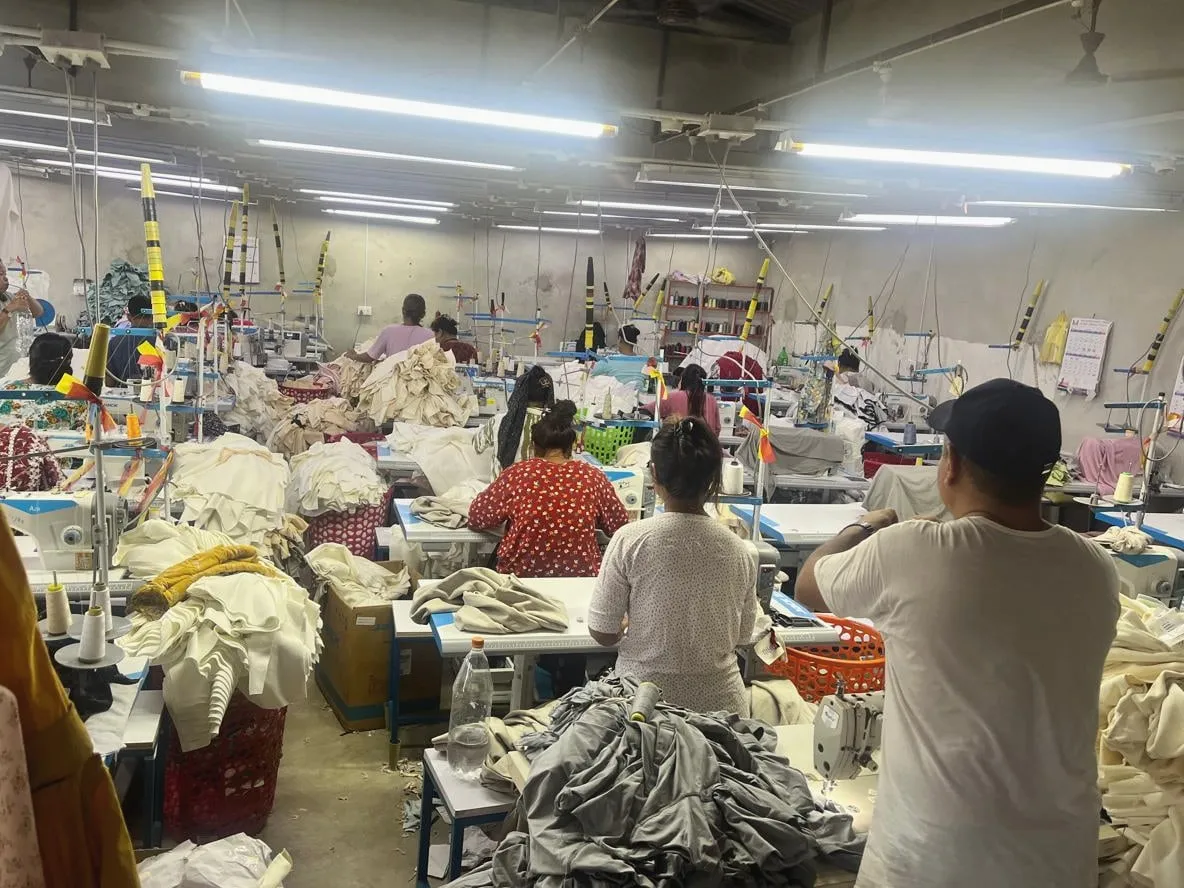
- Single transformation: the garment must be made up in the country from fabric. Cutting and sewing is enough; the fabric can come from anywhere.
- Double transformation (sometimes called “fabric forward”): the fabric must be knitted or woven in the country as well, and then made up there. Yarn can be imported; fabric cannot.
- Yarn forward (sometimes called triple transformation): yarn, fabric and garment must all be made inside the agreement area.
| Rule | Examples for knit garments | Imported fabric allowed? |
|---|---|---|
| Single transformation | EU for least developed countries; UK DCTS; Canada LDCT; Japan GSP | Yes |
| Double transformation | EU GSP for other developing countries; EU–Vietnam FTA | No, unless it comes from a permitted cumulation partner |
| Yarn forward | CPTPP (e.g. Vietnam into Canada) | No, and the yarn must qualify too |
What do the origin rules actually say in each market?
The labels above are shorthand; customs applies the legal text, and the details matter. For cut-and-sewn knitwear, the EU’s rule is “Manufacture from fabric” for least developed countries and “Knitting and making-up (including cutting)” for other beneficiaries. The UK DCTS, Canada’s LDCT and Japan’s GSP allow imported fabric, and the US gives Nepal no preference.
EU. The EU’s list rules for GSP goods (Annex 22-03 to Delegated Regulation 2015/2446) split Chapter 61 garments that are sewn from pieces of knitted fabric into two columns. For least developed countries (LDCs) the rule is “Manufacture from fabric”. For other beneficiary countries it is “Knitting and making-up (including cutting)”. The LDC relaxation has applied since 1 January 2011. One trap: garments knitted directly to shape (fully fashioned knitwear, rather than cut and sewn) have a separate, stricter rule that requires spinning or yarn dyeing plus knitting for every beneficiary. The EU–Vietnam FTA is a good example of double transformation in practice: its rule for Chapters 61–63 is “knitting or weaving accompanied by making-up (including cutting)”, with a special cumulation that lets Korean fabric count.
UK. Under the Developing Countries Trading Scheme (DCTS), only one significant process, such as cutting and sewing, must take place in a DCTS country. Nepal is in the Comprehensive Preferences tier, and since 1 January 2026 the same garment rules also apply to the Enhanced Preferences tier.
Canada. Since 1 January 2025 the Least Developed Country Tariff rules (SOR/2023-210) say apparel originates in an LDC if it is “cut, or knit to shape, and sewn or otherwise assembled” there. T-shirts are on a separate list that needs only sewing or assembly, and only the fabric that determines the garment’s tariff classification is considered. This is why Canada now accepts fabric from anywhere, including China.
Japan. Since 1 April 2015 Japan’s GSP rule for knitted apparel (Chapter 61) is “manufactured from fabrics”, replacing the old “manufactured from yarns”.
United States. The US gives Nepal no preference (the Nepal Trade Preference Program expired on 31 December 2025), so Nepali knitwear pays normal MFN duty and no preferential origin rule applies.
Which operations never confer origin, even under single transformation?
Single transformation is generous, but it has a floor. The EU lists operations that never confer origin, on their own or combined, including ironing or pressing of textiles, affixing labels, logos or marks, and simple packaging. A garment sewn in one country and then pressed, labelled and bagged in another keeps its first origin.
The same logic is why relabelling blank garments does not change where they were made.
Transport matters too. The EU replaced its old direct-transport rule in 2011 with a non-manipulation rule: the goods declared in the EU must be the same goods that left the exporting country, not altered on the way, although storage and splitting of consignments in transit countries are allowed under customs supervision. That is what lets Nepali goods move through Kolkata without losing their status.
How much duty does the origin rule decide on an EU order?
Take 3,000 cotton knit T-shirts with a customs value of US$4.00 each, US$12,000 in total, entering the EU, where the third-country rate is 12%. Duty runs from US$0 for Nepal under EBA, with the single-transformation rule met, to US$1,440 if origin is refused on verification. The figures are illustrative; import VAT is charged on top in every case.
| Origin and rule outcome | Duty rate | Duty on the order |
|---|---|---|
| Nepal, EBA while Nepal is a least-developed country (LDC), single-transformation rule met | 0% | US$0 |
| India, standard GSP | 9.6% | US$1,152 |
| China, third-country duty | 12% | US$1,440 |
| Nepal, but origin refused on verification | 12% | US$1,440, payable by the importer |
The last row is the one to plan against. EU customs can ask the exporting country to verify origin after the goods have been released, and the duty can be recovered from the importer up to three years after import.
What changes after Nepal’s LDC graduation?
Nepal is scheduled to graduate from LDC status on 24 November 2026. It has asked the UN for more time, and on 21 July 2026 ECOSOC recommended that the General Assembly decide before that date. Each market handles the transition differently; in the EU, garments would eventually face the non-LDC rule, which means double transformation:
- EU: Everything But Arms continues for three years after graduation takes effect, at least until the end of 2029. After that Nepal would move to standard GSP, which reduces duty (India pays 9.6% on these lines today), or to GSP+, which cuts the same tariffs to 0% for countries that qualify. Either way, garments would then face the non-LDC rule, “knitting and making-up”, which means double transformation.
- UK: a three-year transition in Comprehensive Preferences, then an expected move to Enhanced Preferences, which is 0% on these lines and has used the same single-transformation garment rules since 1 January 2026. The UK decides which tier Nepal goes into.
- Canada: three extra years of full LDCT benefits. After that the origin rule is not the problem; the rate is, because the General Preferential Tariff does not make these apparel lines free, so the 18% MFN rate would be expected.
- Japan: Japan’s 2026 Trade Policy Review statement says graduated LDCs now keep LDC treatment for up to three years after graduation. Treat the exact end date as still to be confirmed; after that the WTO rate of 7.4–10.9% would apply, because these lines have no general-GSP rate.
Our LDC graduation guide covers the timing in more detail.
What should an importer check before claiming a preference?
Put the HS code on the purchase order, ask which rule each style relies on and where cutting and sewing happen, and record the fabric mill and its country. For the EU, check the exporter’s REX number. Keep the origin paperwork with the entry, and check the rule again when anything changes.
- Put the HS code on the purchase order. Origin rules are written per heading: cut-and-sewn and knitted-to-shape garments follow different rules, and Chapter 62 (woven) differs again.
- Ask which rule each style relies on, and where cutting and sewing actually happen. Sewing that is subcontracted to another country breaks the claim.
- Record the fabric mill and its country even where origin does not depend on it. You will need it for post-graduation planning, traceability labelling and US forced-labour enquiries.
- For the EU, check the exporter’s REX number on the European Commission’s public validation page before you claim, and stop claiming if it is not valid.
- Keep the origin paperwork (statement on origin, UK origin declaration, Canadian Form B255 or Japanese Form A) with the entry. The EU asks REX exporters to keep their records for at least three years.
- Check the rule again when anything changes: a new fabric, a new market, a new HS line or a new date.
This is a practical explanation, not legal advice. Confirm the rule for your exact HS line and market with your customs broker.
How does Trishakti Apparel handle origin for your order?
We cut and sew in Gaindakot, Nepal. We source fabric to your spec from established mills, and you choose: our regular mills, OEKO-TEX-certified fabric, or a mill you nominate. We confirm the mill and its country before you order, so the origin position of every style is known in advance.
As a REX-registered exporter we make out the EU statement on origin, and we supply the UK, Canadian and Japanese origin documents. Tell us your market and HS code and we will confirm which rule applies to your product.
Frequently asked
If a blank T-shirt made elsewhere is printed or labelled in Nepal, is it Nepali origin?
Do the thread, labels, buttons and zips have to originate in Nepal too?
Can fabric from India or Bangladesh help once the EU applies double transformation?
We paid full duty on goods that qualified. Can we reclaim it?
Who pays if origin is refused after the goods are cleared?
About the author
Santosh Rijal runs Trishakti Apparel, the export knitwear factory his family built on three decades in Nepal’s fashion trade. He writes about sourcing, duty and production from the factory floor in Gaindakot.
LinkedIn ↗