Sourcing · How to
Choosing a school uniform manufacturer: the buyer’s guide
What separates a good school uniform manufacturer from a risky one — colour continuity across years, the right fabrics and constructions, childrenswear safety built in at design stage, realistic minimums, and the questions that reveal everything before you order.
A school uniform is an unusual product: it must be cheap enough for every family, tough enough for a year of weekly washing, safe enough for children, and — hardest of all — the same colour next September as this one. Choosing the manufacturer behind it is therefore a different decision from ordinary apparel sourcing, and this guide covers what actually matters, wherever in the world your schools are.
What are the four tests of a school uniform manufacturer?
Four things above all: proven colour continuity, construction that survives a year of weekly washing, childrenswear safety designed in at tech-pack stage, and minimums that match a school’s real volumes rather than wholesale scale. A supplier who can’t describe how they match next year’s batch will fail you in year two, when it’s expensive.
- Colour continuity. The defining schoolwear discipline: approved lab dips retained as the standard, one dye lot per order, recipes on file. A supplier who can’t describe their process for matching next year’s batch will fail you in year two — when it’s expensive.
- Construction for abuse. Taped back necks, twin-needle seams, reactive dyeing, shrink-controlled (compacted) fabric — the specs that survive 40 home washes. Why compacting matters.
- Safety designed in. Children’s garments carry real rules — cord and drawstring restrictions by age, secured trims, needle controls. A manufacturer should flag these at tech-pack stage, not after inspection. The kidswear safety rules in full.
- Minimums that fit schools. A school colour is not a fashion colour — volumes are predictable but modest. Match the factory’s MOQ to your actual annual intake per colour before falling in love with a price.
What fabrics and specs do school uniforms use?
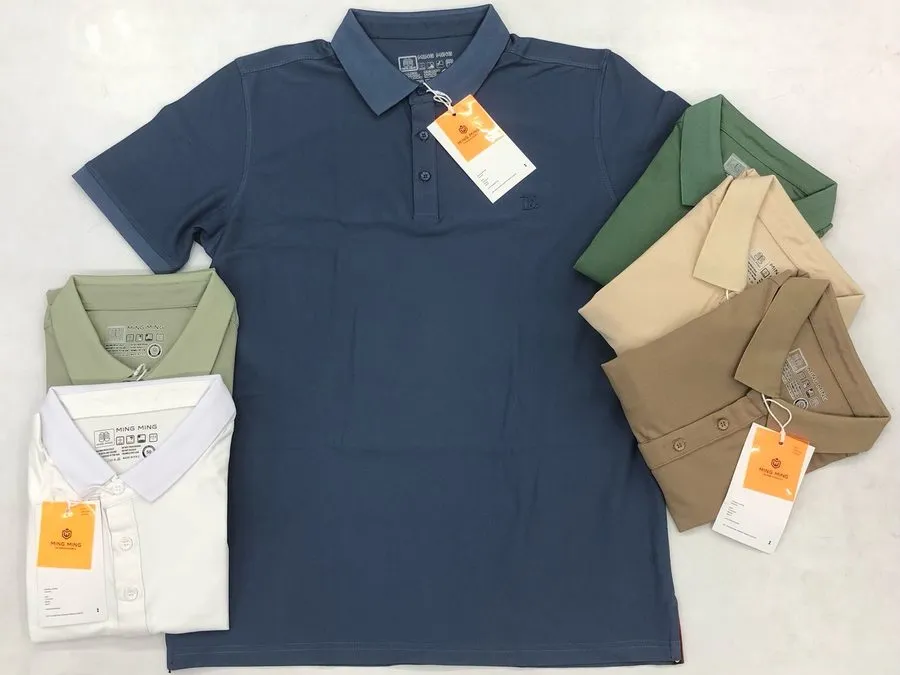
School polos are typically 65/35 poly-cotton piqué at 200–220 gsm with a flat-knit collar, and sweatshirts 260–310 gsm fleece with a taped back neck. PE and sports tops use polyester or poly-cotton knits. The poly content is deliberate: blends survive a year of weekly washing far better than pure cotton.
| Garment | Trade-standard spec | What decides quality |
|---|---|---|
| School polo | 65/35 poly-cotton piqué, 200–220 gsm, flat-knit collar | Reactive dyeing; a collar that lies flat after washing |
| School sweatshirt | 260–310 gsm fleece, taped back neck | Shade match on reorder; shrinkage control |
| PE & sports tops | Polyester or poly-cotton knits | Wicking; surviving weekly wash cycles |
Fabric choice is worth its own five minutes: CVC vs TC vs polyester for uniforms explains why poly-rich blends dominate schoolwear, and the polo guide covers the collar — where uniform quality is judged in one glance.
Which questions should I ask a school uniform manufacturer?
Ask how they match a reorder colour two years later, what their shrinkage tolerance is in writing and whether the fabric is compacted, how they handle cord and trim safety for the age range, what exactly their minimum is per style and per colour, and whether you can see the floor.
- “Walk me through how you match a reorder colour two years later.” (Listen for lab dips and recipes, not reassurance.)
- “What’s your shrinkage tolerance in writing, and is the fabric compacted?”
- “How do you handle cord and trim safety for the age range?”
- “What exactly is your minimum per style and per colour — and what happens to price at my real volume?”
- “Can I see the floor — in person or on a live video call?” How to verify any factory remotely.
Which school uniforms does Trishakti Apparel make?
We make school polos, sweatshirts, PE tees and kids’ knits in Nepal from 200 pieces per style and colour (1,000 per order), with the colour-continuity discipline described above and 0% import duty into the UK, EU, Canada and Japan. Blazers and tailoring are outside our floor, and sublimated sports kit belongs with the sublimation specialists.
UK suppliers navigating the branded-items cap have a dedicated guide; mixed schoolwear-and-workwear houses should read the corporate-uniform programme guide. And where we don’t fit, honestly: our woven shirts are casual cotton styles rather than formal school shirts.
Our process with real numbers, or send us your two best-selling school colours and we’ll quote them landed against your current supplier, line by line.
Frequently asked
What should I look for in a school uniform manufacturer?
What is the typical MOQ for school uniforms from a manufacturer?
What fabric is used for school uniforms?
How do manufacturers keep school colours consistent year after year?
About the author
Santosh Rijal runs Trishakti Apparel, the export knitwear factory his family built on three decades in Nepal’s fashion trade. He writes about sourcing, duty and production from the factory floor in Gaindakot.
LinkedIn ↗