Low MOQ · Startups
Low-MOQ clothing manufacturing: how small brands keep first orders affordable
Export mega-factories want 3,000–10,000 pieces per style. Here’s how emerging brands find low-MOQ manufacturers, why minimums exist, what “low” honestly means, and how to keep a first order affordable.
If you’re launching or growing a clothing brand, the biggest wall you hit is the MOQ — the minimum order quantity a factory will run. The big export hubs commonly demand 3,000–10,000 pieces per style and colour — impossible cash-flow for a brand testing a range. Here’s how to work with low-MOQ manufacturers instead.
Why do clothing factories set minimum order quantities?
Because every style needs setup — pattern, marker, fabric ordering, machine changeover, a sample round. Big factories spread that cost over huge runs, so small orders aren’t worth their time. Smaller, flexible factories are structured differently and can run a few hundred pieces per style and colour economically — and structure colour splits so a test order stays lean.
What MOQ should a small brand realistically expect?
At a low-MOQ export factory, knit basics such as tees and polos start from around 200 pieces per style and colour, the honest floor where real production economics start. Ours is 200 per style and colour, with 1,000 pieces in total per order. The big export hubs commonly demand 3,000–10,000 pieces per style and colour. Below about 100 pieces you’re usually into print-on-demand or local makers, at far higher unit cost.
- Knit basics (tees, polos): from around 200 pieces per style and colour at a low-MOQ export factory (ours also asks for 1,000 pieces in total per order) — the honest floor where real production economics start.
- Below ~100 pieces you’re usually into print-on-demand or local makers, at far higher unit cost.
- Fabric minimums can drive the real floor — using in-stock fabrics keeps MOQ low.
How can you keep your first order small?
Limit colours, use common fabrics, start with one or two hero styles and be clear about your growth plan. Minimums usually apply per colour, so consolidating three colours into one hero colour keeps a test lean: three colours at 200 pieces is 600 pieces, while one hero colour at 200 is only 200. (At our factory the order as a whole must also reach 1,000 pieces, so a first order could be, say, two styles in two colours at 250 each.) Prove sell-through first, then scale.
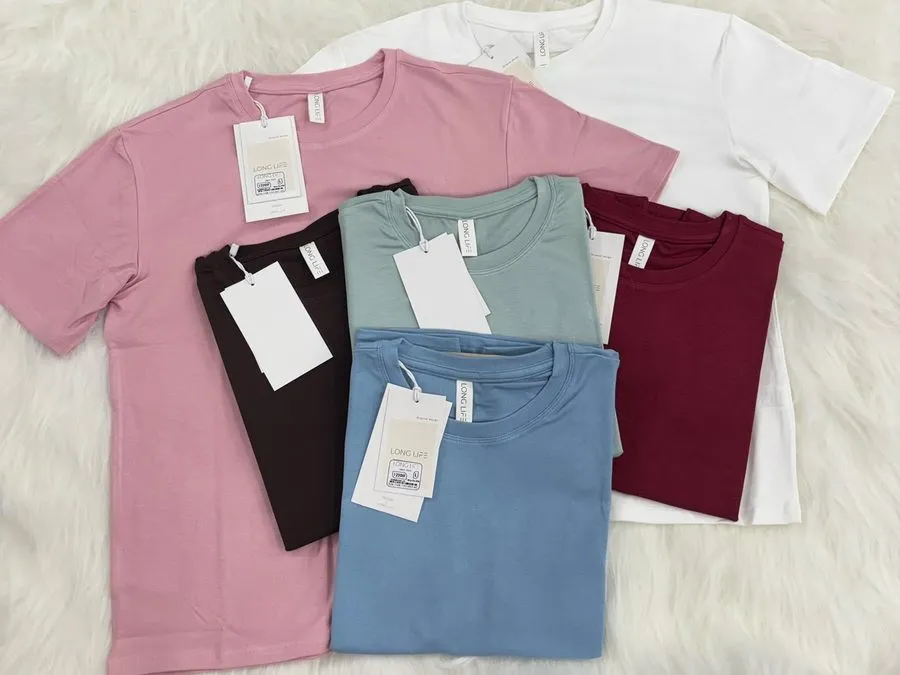
- Limit colours — minimums usually apply per colour, so consolidating three colours into one hero colour keeps a test lean: three colours at 200 pieces is 600 pieces, while one hero colour at 200 is only 200. (At our factory the order as a whole must also reach 1,000 pieces, so a first order could be, say, two styles in two colours at 250 each.)
- Use common fabrics the factory already stocks or buys in volume.
- Start with 1–2 hero styles, prove sell-through, then scale.
- Be clear about your growth plan — factories flex minimums for brands they expect to grow with.
Why does landed cost matter for a small first order?
Because a low MOQ is worth little if duty eats your margin. Sourcing from a least-developed country (LDC) like Nepal, your knit basics enter the EU, UK, and Canada duty-free — so a small, affordable run also lands cheaply. Here’s how that works.
Can a new brand start small with Trishakti Apparel?
Yes, and we welcome new customers: minimums from 200 pieces per style and colour with 1,000 pieces in total per order, flexible planning, and the attention a growing brand actually needs. Start small, scale as you sell. Here’s exactly where we sit on the MOQ map. See our line or tell us what you’re launching.
About the author
Santosh Rijal runs Trishakti Apparel, the export knitwear factory his family built on three decades in Nepal’s fashion trade. He writes about sourcing, duty and production from the factory floor in Gaindakot.
LinkedIn ↗