How to · Startups
Sample to bulk: what to expect on your first clothing production order
Every stage between your first sample and a shipped bulk order: fit and size-set samples, lab dips and strike-offs, the pre-production sample, bulk fabric approval, the PP meeting, top of production and inspection. What you approve at each, a realistic timeline, and what can change between sample and bulk.
A first production order can feel like a black box: you approve a sample, then wait weeks for cartons you have not seen. It is not a black box. A well-run order moves through a fixed set of stages, and at each one you approve something specific. Knowing the stages tells you what to ask for, when to ask, and where a disorganised supplier will show itself.
What are the stages from sample to bulk, and what do you approve at each?
A first order moves through fit and size-set samples, lab dips and strike-offs, the pre-production sample, bulk fabric approval, the PP meeting, top of production and inspection. At each stage you approve something specific, in writing. Not every order needs every stage.
On a simple basic in a proven fit, the fit sample and the pre-production sample may be the same garment. On a new fit, a new fabric or a decorated style, skipping stages usually costs more time than it saves.
| Stage | What it is | What you approve |
|---|---|---|
| Proto or fit sample | The factory’s first build from your tech pack, sometimes in substitute fabric or colour | Fit, proportions, construction; comments go back as a revised spec |
| Size set | Samples in several sizes, often the smallest, base and largest | That the grading works across the size range |
| Lab dips | Small swatches dyed to your colour standard on the actual fabric quality | The shade, judged in daylight or a light box against your standard |
| Strike-offs | A test print or embroidery on the actual fabric | Colour, size, placement and hand-feel of the decoration |
| Pre-production (PP) sample | The garment as it will be made in bulk: approved fabric, colour, trims, labels, decoration | Everything. It becomes the sealed standard for bulk and inspection |
| Bulk fabric approval | A swatch or test results from the bulk fabric before cutting | Weight, shade against the lab dip, shrinkage |
| PP meeting | The factory’s production, cutting and QC teams review the PP sample and your comments | Nothing, but ask for the notes: they show what the line will watch |
| Top of production (TOP) | The first finished pieces off the line | Measurements and workmanship match the PP sample |
| In-line inspection | Checks during sewing | Nothing, unless your inspector visits; problems are fixed on the line |
| Final AQL inspection | A statistical sample of finished, packed goods | Pass or fail, which your balance payment can depend on |
Approve each stage in writing, specifically: which sample, which reference, subject to which comments. “Looks good” in a chat message is not an approval anyone can inspect against. What to check before you approve a sample.
How long does a first order take from sample to delivery?
A first order by sea typically runs three to four months from first contact to delivery. At Trishakti Apparel the first sample takes 7–14 days after tech-pack review, bulk takes 25–30 days after sample approval, and sea freight to Europe takes roughly 6–8 weeks.
These are our confirmed timings. Your review time and the number of revision rounds are the parts you control.
| Step | Timing |
|---|---|
| Tech pack review, pattern and grading in Optitex CAD | The first days after your brief |
| First sample | 7–14 days after tech-pack review |
| Express courier to you | Usually 3–7 days |
| Your review and comments | As fast as you can make it |
| Revision round, if needed | Most of the sample and courier time again |
| Lab dips and strike-offs | Best run alongside sampling, so they never hold up bulk |
| PP sample approved in writing | The bulk clock starts here |
| Bulk: fabric and trims sourced and inspected, cutting, sewing with in-line checks, final AQL 2.5 inspection, packing and documents | 25–30 days after sample approval |
| Sea freight to Europe | Roughly 6–8 weeks |
| Air freight, for urgent goods | About a week |
Add it up and a first order by sea typically runs three to four months from first contact to delivery. Reorders are faster, because the patterns and approved standards already exist. Count back from your in-store date.
What can change between the approved sample and bulk production?
Shade, shrinkage, fabric weight, hand-feel, measurements, decoration and trims can all vary between sample and bulk. The PP sample is one garment, often made before the bulk fabric exists. Bulk is thousands of garments from fabric dyed and finished for your order.
Some variation is normal; your job is to decide in advance how much, and to check it before cutting rather than after packing.
- Shade. Every dye lot varies slightly. Approve the lab dip on the actual fabric quality, not on a paper chip or a different fabric, keep the approved standard, and have shade checked against it at inspection. Ask whether your order will run in one dye lot or several.
- Shrinkage. Bulk fabric finishing can behave differently from sample fabric. Put a shrinkage tolerance and test method in your spec, and ask for the bulk fabric test result before cutting, so the pattern can be adjusted if needed.
- Fabric weight. Knit fabric is specified with a tolerance, commonly ±5% on GSM. State the finished weight and tolerance you accept, and check a bulk swatch against it. How to specify GSM.
- Hand-feel. Softeners and finishing can change how the fabric feels. If hand-feel matters, approve a bulk fabric swatch, not only the sample.
- Measurements. Bulk garments vary within tolerance. A spec with measuring methods and tolerances turns “it feels smaller” into a measurable pass or fail. Check measurements at top of production, when a correction is still cheap.
- Decoration. A print approved on a sample colour can look different on the bulk dye lot. Approve strike-offs on the bulk fabric where you can.
- Trims. Labels, threads, drawcords and packaging should match an approved trim list. Any substitute needs your written approval before it is used.
How do you keep bulk production close to the approved sample?
Keep a sealed counterpart of the approved PP sample, issue every change as a new, dated version of the tech pack, and approve bulk fabric before cutting. Ask for top-of-production photos and measurements, and book final inspection against the approved sample, spec and packing instructions, with your balance linked to the result.
A short list keeps bulk close to the sample:
- Keep a sealed counterpart of the approved PP sample, with the factory holding the other.
- Issue every change as a new, dated version of the tech pack.
- Ask for bulk fabric approval before cutting, not after sewing.
- Ask for top-of-production photos and measurements.
- Book final inspection against the approved sample, spec and packing instructions, and link your balance to the result. How AQL inspection works.
Where do first-order timelines slip?
Timelines slip with slow approvals, vague tech packs, late colour decisions and changes after approval. A week spent deciding is a week added to delivery, every missing detail becomes a revision round, lab dips approved after the PP sample hold up bulk fabric, and changes after approval restart parts of the clock.
- Slow approvals. A week spent deciding is a week added to delivery.
- Vague tech packs. Every missing detail becomes a revision round.
- Late colour decisions. Lab dips approved after the PP sample hold up bulk fabric.
- Changes after approval. They restart parts of the clock.
How does Trishakti Apparel run a first order?
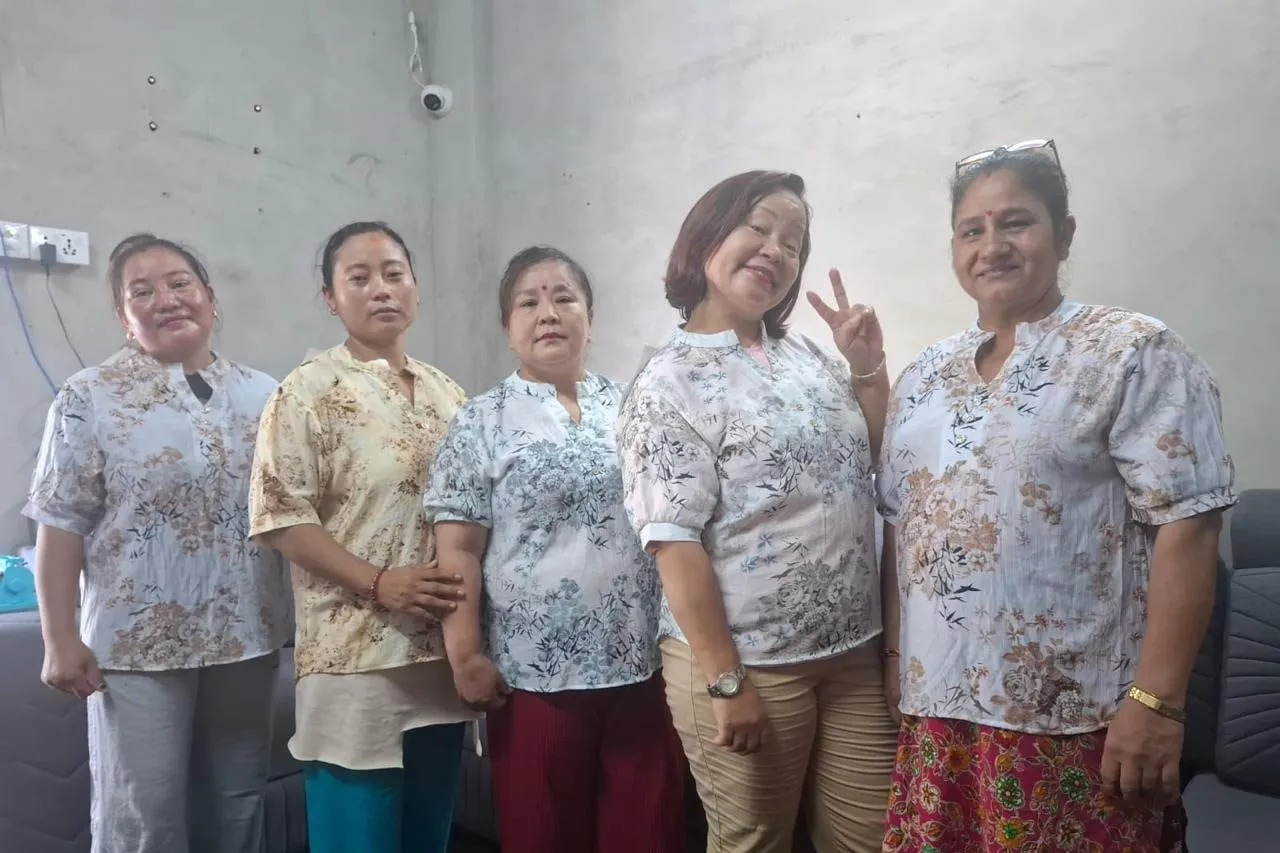
We are a cut-and-sew knitwear factory in Gaindakot, Nepal. We make patterns and grading in Optitex CAD, send your sample 7–14 days after tech-pack review, and revise until you sign it off; nothing is cut for bulk before you approve.
Bulk takes 25–30 days after approval, with in-line checks, QR bundle tracking and a final AQL 2.5 inspection, and your third-party inspector is welcome. You get photo and status updates at every stage on WhatsApp or email. Print and embroidery are arranged through trusted partner decorators near Gaindakot and coordinated by our team. See how an order runs, or send us your tech pack.
Frequently asked
How long does garment sampling take?
Do I have to pay for samples?
Can I skip the size set?
Why does bulk colour sometimes differ from the sample?
Can I change the design after approving the pre-production sample?
About the author
Santosh Rijal runs Trishakti Apparel, the export knitwear factory his family built on three decades in Nepal’s fashion trade. He writes about sourcing, duty and production from the factory floor in Gaindakot.
LinkedIn ↗