Duty-free · Sourcing
Nepal LDC graduation 2026: what apparel importers need to know
Nepal is scheduled to graduate from Least Developed Country status on 24 November 2026, with a deferral request pending at the UN. Here is what happens to duty on Nepali garments in the EU, UK, Canada, Japan and other markets, when each transition ends, why the EU is the market where the rules tighten, and how to plan.
Nepal is scheduled to leave the UN’s Least Developed Country (LDC) category on 24 November 2026. For apparel importers the short answer is that nothing changes at the border on that day: the EU, UK, Canada and Japan all keep LDC-level access for up to three more years. The real deadline is around the end of 2029, it falls differently in each market, and the EU is the one market where the origin rule itself gets stricter. This guide sets out what is known as of 27 September 2026, what is still open, and how to plan around it.
When does Nepal graduate from LDC status?
Nepal is scheduled to graduate on 24 November 2026. On 15 May 2026 it asked the UN for about three more years, and the Committee for Development Policy found an extension appropriate if tied to a clear, time-bound transition plan. As of 27 September 2026 we have not seen a General Assembly decision, so the scheduled date still stands.
- The scheduled date is 24 November 2026.
- Nepal has asked for more time. On 15 May 2026 the Government of Nepal asked the UN to extend its preparatory period, seeking about three more years.
- The UN’s advisers were open to it. The Committee for Development Policy found that an extension by the General Assembly would be appropriate if it is tied to a clear, time-bound transition plan.
- The decision sits with the General Assembly. On 21 July 2026 ECOSOC recommended that the General Assembly decide before 24 November 2026. As of 27 September 2026 we have not seen a decision, so the scheduled date still stands.
So there are two cases to plan for: graduation on 24 November 2026 as scheduled, or a later date if the deferral is granted. Everything below uses the scheduled date; the deferral section explains what moves if it changes.
What does LDC graduation change for garment duty?
Graduation does not change where a garment is made or its HS code; it changes which scheme applies and, in the EU, which origin rule the garment has to meet. LDC status is a UN category, and each importing country’s own scheme decides for itself what happens when a country leaves the list.
The duty-free access Nepali garments enjoy comes from those schemes: Everything But Arms (EBA) in the EU, the Developing Countries Trading Scheme (DCTS) in the UK, the Least Developed Country Tariff (LDCT) in Canada and Japan’s LDC preference.
What happens to duty on Nepali garments in each market?
Nothing changes at the border on 24 November 2026 in the EU, UK, Canada or Japan, which keep LDC-level access for up to three more years. The US gives no preference to lose, the UAE has no LDC preference, and India’s treaty route continues. China and Australia have announced no transition, so their 0% may end at graduation.
Rates are for cotton knit T-shirts, polos and sweatshirts (HS 6109.10, 6105.10 and 6110.20) unless stated.
| Market | Today, while Nepal is an LDC | Transition after graduation | Expected afterwards |
|---|---|---|---|
| EU | 0% under EBA (standard rate 12%) | EBA for three years, at least until the end of 2029 | Standard GSP (9.6% today) or GSP+ (0%), but only for garments meeting the non-LDC origin rule; otherwise 12% |
| UK | 0% under DCTS Comprehensive Preferences (standard rate 12%) | Three years in Comprehensive, to about November 2029 | Enhanced Preferences, 0% with the same garment rules; tier set by the UK |
| Canada | 0% under LDCT (MFN rate 18%) | Three more years of full LDCT, to about November 2029 | 18% MFN, because the General Preferential Tariff excludes most apparel |
| Japan | 0% LDC preference | LDC treatment for up to three years; exact end date to be confirmed | WTO rate: 7.4% plain cotton T-shirts, 10.9% printed T-shirts, polos and sweatshirts |
| United States | No preference: 16.5% cotton T-shirts, 32% man-made-fibre T-shirts | None needed | No change |
| China | 0% under its zero tariff for LDCs (MFN 6%) | None announced | 6% MFN (2026 rate) unless China decides otherwise |
| India | 0% under the Nepal–India Treaty of Trade or SAFTA, if the origin rules are met | Treaty does not depend on LDC status | Treaty route continues; SAFTA’s LDC treatment ends |
| UAE | 5% GCC duty; no LDC preference exists | Not affected | 5%, unchanged |
| Australia | 0% if the 50% factory-cost rule is met (general rate 5%) | No published transition found | 5% general rate unless Australia decides otherwise |
Our duty status page tracks these rows with their sources and is updated as schemes publish decisions.
Why do EU origin rules get stricter after graduation?
For LDCs, the EU’s rule for knitted garments sewn from fabric is “manufacture from fabric”: cutting and sewing in Nepal is enough, wherever the fabric was knitted. Once EBA ends, Nepal faces the non-LDC rule, “knitting and making-up (including cutting)”: the fabric must be knitted in the country too (double transformation), subject to the EU’s cumulation provisions.
That has a consequence many summaries miss. GSP+ cuts the standard GSP duties to 0%, but it does not bring back the LDC origin rule. After EBA ends, a garment only gets a GSP or GSP+ rate if it meets “knitting and making-up”. So for EU shipments after the transition:
| Garment made from… | Standard GSP | GSP+ (if Nepal qualifies) |
|---|---|---|
| Fabric knitted in Nepal, or qualifying fabric from a regional cumulation partner | 9.6% | 0% |
| Other imported fabric | 12% (no preference) | 12% (no preference) |
The new EU GSP Regulation (EU) 2026/1395 applies from 1 January 2027, and GSP+ is granted on application to vulnerable low- and lower-middle-income countries that implement a set of international conventions; even existing GSP+ beneficiaries must reapply. Whether Nepal applies and qualifies is not yet known. Our guide to single and double transformation explains the rules and regional cumulation in detail.
The UK went the other way: since 1 January 2026 its Enhanced Preferences tier uses the same single-transformation garment rules as the LDC tier, so moving tier should not force a change of fabric source. One caveat: Enhanced Preferences are for countries that also meet the UK’s economic vulnerability criteria. Otherwise the remaining tier is Standard Preferences, which the UK tariff currently shows at 9.6% on cotton T-shirts. The UK decides, and for Bhutan it published the tier move in advance.
Does the shipping date or the customs clearance date count?
The customs declaration date counts. The EU’s guide for GSP importers says a preference must exist when the proof of origin is made out at export and also when customs accepts the declaration for release into free circulation. If EBA ends while goods are at sea, it cannot be granted, even with a valid statement on origin.
Assume the same for the UK and Canada unless your broker confirms otherwise. Sea freight from Nepal to Europe takes roughly 6–8 weeks from ex-factory. So treat each end date as a clearance deadline and work backwards: last cut date, last ex-factory date, last sailing, with a buffer for port delays.
What happens to the transition dates if the deferral is granted?
On the schemes’ current wording, they move back. Each transition counts from the date graduation takes effect, so if the General Assembly granted the roughly three years Nepal asked for, each end date would move by about the same amount, towards 2032. Until a decision is published, plan on the scheduled date and treat any deferral as extra time.
The transitions are the EU’s three years after graduation, the UK’s three-year transition after UN graduation, Canada’s three years after the formal change in status, and Japan’s up to three years after graduation.
How should importers plan for Nepal’s LDC graduation?
Plan on the scheduled date and work in stages. Use 2026–2027, while LDC-level rates continue in the EU, UK, Canada and Japan, to record each style’s fabric mill and country. Decide your EU plan in 2028. In 2029, book the last transition shipments to clear before the end dates, not just to sail before them.
- 2026–2027: use the window. LDC-level rates continue in the EU, UK, Canada and Japan. China and Australia have announced no transition, so their 0% may end at graduation. For every style, record the fabric mill and its country; you will need it for the post-2029 EU decision.
- 2028: decide the EU plan. Compare three options for each core style: stay with imported fabric and budget for 12%, move to a fabric source that can meet the non-LDC rule, or rebalance volume between markets. Watch for news on Nepal’s GSP+ position and the UK tier.
- 2029: time the last shipments. Book the last EU, UK and Canadian transition shipments to clear before the end dates, not just to sail before them.
- Throughout: write it into contracts. Quote landed cost with and without the preference, and agree in advance who carries a duty change on orders that straddle an end date.
This is a practical summary, not legal advice. Confirm the rule and rate for your exact HS line and market with your customs broker before you commit.
How is our factory preparing for LDC graduation?
We confirm the fabric mill and its country before you order, so each style’s origin position is known now and after the transition. We cut and sew in Gaindakot, Nepal, and source fabric to your spec from established mills: you choose our regular mills, OEKO-TEX-certified fabric, or a mill you nominate.
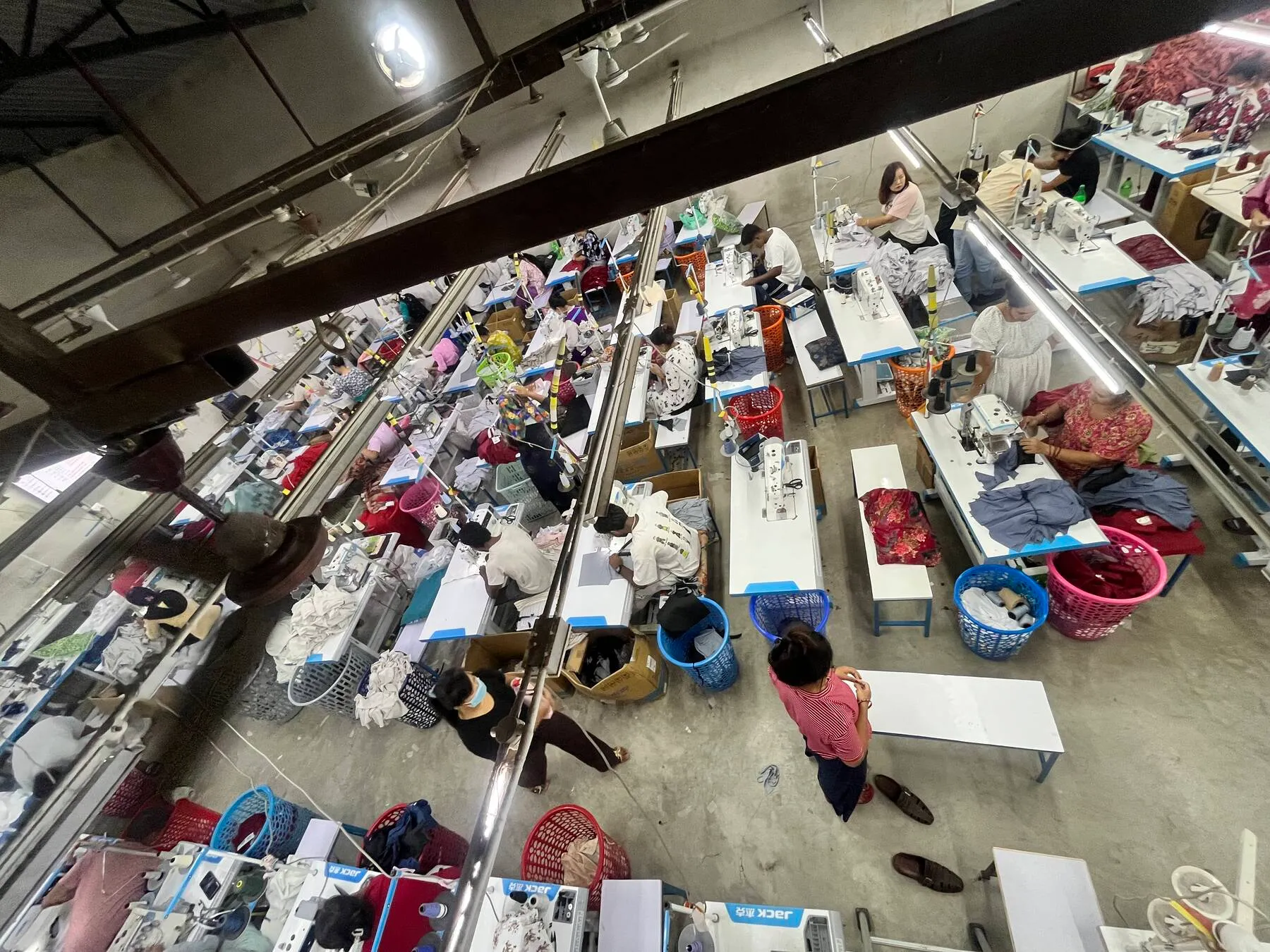
As a REX-registered exporter we issue the EU statement on origin, and we supply the UK, Canadian and Japanese origin documents. For the duty levers that do not depend on LDC status, see how to reduce apparel import duty legally. Tell us your markets and styles and we will map your programme against these dates.
Frequently asked
Will Nepali garments stay duty-free in the EU after LDC graduation?
Does anything change for UK buyers?
What if my goods ship before a preference ends but arrive after?
If the UN grants Nepal’s deferral, do the dates move?
Does graduation change anything for US buyers?
About the author
Santosh Rijal runs Trishakti Apparel, the export knitwear factory his family built on three decades in Nepal’s fashion trade. He writes about sourcing, duty and production from the factory floor in Gaindakot.
LinkedIn ↗