Duty-free · Pricing
How to legally reduce your apparel import duty
Import duty is the customs value multiplied by a rate, and every legitimate saving works on one of those: the HS code, the origin and the proof behind it, and what goes into the customs value. Here are the levers for knitwear importers into the EU, UK, US, Canada and Japan, a worked example, late-claim windows and what never to do.
Import duty is one of the most controllable lines in a landed cost. On a knit T-shirt the rate can run from 0% to more than 30%, depending on where the garment was made, what it is made of and where it is going. Every legitimate saving works through the same formula:
Duty = customs value × duty rate. The rate comes from the HS code and the origin; the customs value comes from the price plus certain costs. That gives four levers: classify correctly, qualify for a preference and prove it, declare the right value, and claim late if you missed a preference. Some apparent savings cost far more; they are listed at the end.
How does the HS code affect apparel import duty?
The HS code sets the rate, and two details decide most knitwear codes: fibre content and construction. In the US, for example, cotton T-shirts pay 16.5% and man-made-fibre T-shirts pay 32%, and a hem detail chosen in sampling can move a style to another heading with a different rate. Get certainty in writing.
Fibre content. A textile blend is classified as if it were made wholly of the fibre that predominates by weight. When two fibres weigh exactly the same, it goes to the heading that comes last in numerical order, which for cotton and polyester is the man-made-fibre side. In the EU and UK, cotton and man-made-fibre T-shirts both pay 12% from a non-preferential country, but in the US the gap is large: 16.5% for cotton T-shirts (6109.10.00) and 32% for man-made-fibre T-shirts (6109.90.10). A 60/40 cotton-rich CVC tee is cotton; a 50/50 or 65/35 poly-cotton tee is man-made fibre.
Construction. The Chapter 61 notes exclude from heading 6109 (T-shirts) any garment with a drawstring, ribbed waistband or other means of tightening at the bottom. Heading 6105 (knit shirts, including polos) excludes garments with pockets below the waist, a ribbed waistband or other tightening at the bottom, fewer than 10 stitches per centimetre on average in each direction, and sleeveless garments. A hem detail chosen in sampling can therefore move a style to another heading with a different rate: in the US a cotton knit polo (6105.10) pays 19.7% against 16.5% for a cotton T-shirt.
Get certainty in writing. In the EU, Binding Tariff Information is a legal decision on classification that binds every EU customs administration and is generally valid for three years. The UK’s equivalent is an Advance Tariff Ruling. Put the intended code on the purchase order and the tech pack, and check it against your national tariff before the first shipment. Our HS code guide for knitwear covers the codes and rates in detail.
How does a trade preference cut duty, and what proof is needed?
A preference is the largest single lever: from a country with the right access, the rate on cotton knitwear can drop from as much as 18% to zero. But it needs two things: the garment must meet the scheme’s rule of origin, and the importer must hold the right proof when claiming.
For Nepal-made knitwear, while Nepal is a least-developed country (LDC):
| Market | Scheme and rate | Standard rate | Origin rule for knit garments | Proof |
|---|---|---|---|---|
| EU | Everything But Arms, 0% | 12% | Manufacture from fabric (imported fabric allowed) | Statement on origin by a REX-registered exporter on the invoice |
| UK | DCTS Comprehensive Preferences, 0% | 12% | One significant process, such as cutting and sewing | Origin declaration on the invoice (no REX needed), or Form A |
| Canada | Least Developed Country Tariff, 0% | 18% | Cut and sewn in the LDC; fabric from anywhere | Form B255, completed by the exporter |
| Japan | LDC preference, 0% | 7.4–10.9% | Manufactured from fabrics | Form A |
| US | None | 16.5% cotton / 32% man-made-fibre T-shirts | No preference to meet | None |
Three habits protect the claim. Check the exporter’s REX number on the European Commission’s validation page before claiming in the EU. Keep the proof with the customs entry. And remember who carries the risk: EU customs can ask the exporting country to verify origin after release and recover the duty from the importer up to three years after import. The EU’s guidance for importers suggests asking the supplier to confirm in writing how the rule is met. The wording is explained in our guides to the EU statement on origin and the UK origin declaration.
These preferences are tied to Nepal’s LDC status, which is scheduled to end on 24 November 2026 (a deferral request is pending), with transitions of up to three years in these markets. See our LDC graduation guide for the dates.
What goes into the customs value of imported apparel?
Valuation is mostly about not overpaying and not underpaying. All five markets start from the transaction value, the price actually paid or payable, and then differ on freight: the EU, UK and Japan add transport and insurance up to their border, while the US and Canada leave out the international leg. In detail:
| Market | Basis | Transport and insurance in the customs value |
|---|---|---|
| EU | CIF | Added up to the place where the goods enter the EU |
| UK | CIF | Added up to the UK border, including inland transport in the country of export |
| Japan | CIF | Added up to the port of importation |
| US | FOB | International transport and insurance to the US are excluded |
| Canada | FOB | Transport from the “place of direct shipment” to Canada is excluded |
Canada’s place of direct shipment is where the goods begin an uninterrupted journey to a specific Canadian destination. CBSA’s examples show it can be an inland factory when the Canadian destination is fixed at dispatch, so ask your broker how the truck leg to Kolkata is treated.
Every market also adds assists: goods and services the buyer supplies free or at reduced cost for production, such as materials, components, tools and design work done outside the importing country. The UK names labels and price tags as examples, so woven labels, care labels and hangtags you send to the factory belong in the customs value. The EU does not add design work done inside the EU, and the US does not add design work undertaken in the US.
Where you can legitimately save: show a buying commission to your own agent separately from the price, and the UK allows it to be left out (selling commissions stay in). Keep costs that arise after arrival out of the value; the UK, for example, excludes demurrage caused by delay after the goods reach the place of introduction. And in the US and Canada, show the international freight separately so it is not taxed by mistake.
Can you claim a missed duty preference late?
Goods that qualified but were cleared at the full rate, usually because the proof was missing or wrong, can often still get the preference, within time limits: up to three years from release in the EU, two years after importation in the UK, and generally four years for refund claims in Canada. By market:
- EU: a belated claim up to three years from the date the goods were released for free circulation. A statement on origin can also be made out after export, if presented to customs within two years of importation.
- UK: a DCTS claim up to two years after importation, with a valid origin declaration, if all the conditions were met at import.
- Canada: refund claims under section 74 of the Customs Act generally have a four-year limit; ask your broker whether it covers your LDCT case.
- Japan: ask your broker before assuming a later Form A will be accepted.
A late claim cannot create a preference that did not exist when the goods were declared.
How much duty would an order of 3,000 T-shirts pay?
Take 3,000 cotton knit T-shirts at US$3.20 FOB Kolkata, US$9,600 in total. Duty runs from US$0 in the EU with a valid statement on origin to US$3,168 in the US for the same tee in 65/35 poly-cotton. Freight and insurance to a North European port add US$900 (illustrative).
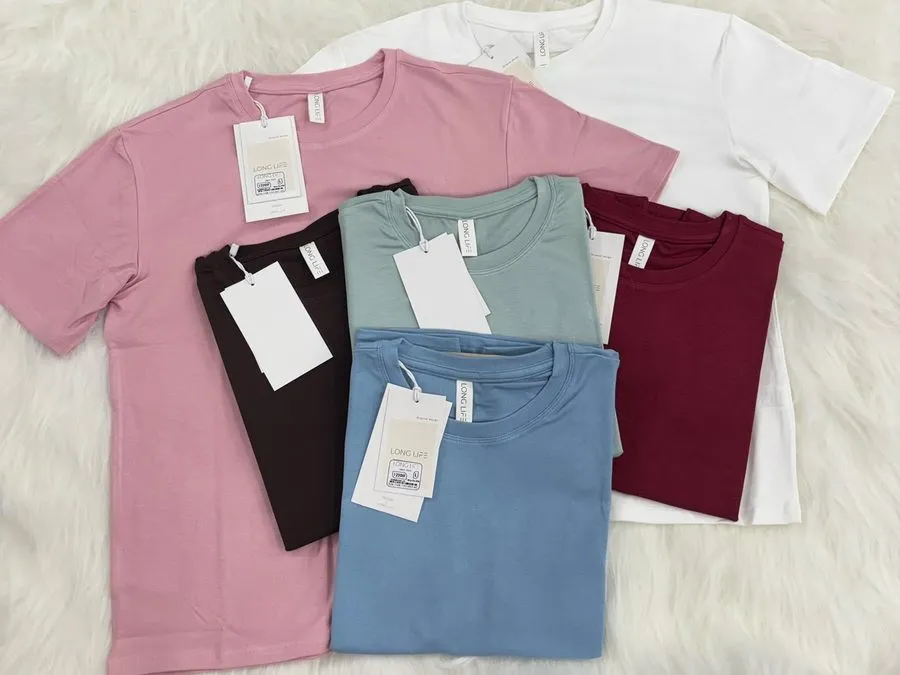
You also send US$300 of woven labels and hangtags to the factory free of charge. Import VAT is charged on top in every case and is not shown.
| Scenario | Customs value | Rate | Duty |
|---|---|---|---|
| EU, Nepal origin, valid statement on origin, while Nepal is an LDC | US$10,800 (CIF plus assist) | 0% | US$0 |
| EU, Nepal origin, statement missing at import | US$10,800 | 12% | US$1,296, reclaimable by a belated claim |
| EU, made in China | US$10,800 | 12% | US$1,296 |
| US, Nepal origin (no preference, no additional duty) | US$9,900 (FOB plus assist) | 16.5% | US$1,633.50 |
| US, the same tee in 65/35 poly-cotton | US$9,900 | 32% | US$3,168 |
Origin and paperwork decide the EU lines, and classification decides the US lines: there, the fibre choice nearly doubles the duty. The labels count either way. Leaving the US$300 out would understate the value, and customs can recover any duty on the difference.
What should importers never do to cut duty?
Never undervalue the goods, misdeclare origin, claim a preference on proof you doubt, or describe the garment as something it is not to reach a lower code. Customs can recover duty on undervalued goods, and penalties can follow; the EU warns that claiming on doubtful proof risks an offence and penalties.
- Undervalue. Split invoices, “sample” invoices for bulk goods, leaving out assists or declaring a lower price than was paid. Customs can recover the duty later, and penalties can follow.
- Misdeclare origin. Pressing, labelling or repacking garments in another country does not change their origin; the EU lists these among operations that never confer it. Routing goods made elsewhere through a preference country to borrow its rate is a false origin claim, and genuine transit has its own conditions: the EU requires the goods not to be altered on the way, and Canada requires direct shipment, with transhipment allowed under customs control.
- Claim on proof you doubt. The EU tells importers not to claim a preference if they doubt the proof or the goods’ entitlement, because doing so risks an offence and penalties.
- Describe the garment as something it is not to reach a lower code. Change the garment if you want a different code; never just the paperwork.
This is a practical guide, not legal advice. Confirm with your customs broker for your exact HS line and market.
How does Trishakti Apparel help with duty and origin paperwork?
We cut and sew knitwear in Gaindakot, Nepal, and quote EXW Gaindakot, FOB Kolkata by sea or FCA Kathmandu by air. As a REX-registered exporter we make out the EU statement on origin, and we supply the UK origin declaration, Canadian Form B255 or Japanese Form A.
We source fabric to your spec from established mills, and you choose: our regular mills, OEKO-TEX-certified fabric, or a mill you nominate. We confirm the mill and its country before you order. Send us your style, destination and HS code and we will tell you which rule and proof apply before you order.
Frequently asked
Is it legal to choose a fabric or construction because it lowers the duty rate?
Does choosing FOB or CIF terms change how much duty I pay?
Do I pay duty on labels and hangtags I send to the factory?
We paid full duty on goods that qualified for 0%. Can we get it back?
How long will the 0% rates for Nepal last?
About the author
Santosh Rijal runs Trishakti Apparel, the export knitwear factory his family built on three decades in Nepal’s fashion trade. He writes about sourcing, duty and production from the factory floor in Gaindakot.
LinkedIn ↗