How to · Sourcing
Private label vs. white label vs. OEM vs. ODM: which do you actually need?
These four terms confuse every new brand. Here’s what each manufacturing model means for clothing, who owns the design, what it does to MOQ, cost and lead time, how the models map to apparel terms like blanks, CMT and full package, and which fits your stage.
Sourcing conversations are full of jargon: private label, white label, OEM, ODM. All four describe the same underlying question, which is how much of the product is yours and how much is the factory’s. Here is each in plain English, what it means for a clothing brand, and how to choose.
What do private label, white label, OEM and ODM mean?
Private label is the business model: a product made by a manufacturer and sold under your brand. White label, OEM and ODM are the ways of producing it. White label is a generic product sold to many brands, OEM is your design made to your specification, and ODM is the factory’s design, adapted by you.
- Private label is the business model: a product made by a manufacturer and sold under your brand name. It says nothing yet about who designed it. White label, OEM and ODM are all ways of producing private label.
- White label: a generic, ready-made product that the manufacturer or wholesaler sells to many brands, each of which puts its own label on it. In clothing, this is the world of blanks: catalogue T-shirts and hoodies you relabel or decorate.
- OEM (original equipment manufacturer): the factory produces your design to your specification. You bring the tech pack or a reference garment; the factory develops the pattern, samples and produces it.
- ODM (original design manufacturer): the factory offers its own designs, which you adapt (fabric, colours, trims, labels) and sell under your brand.
How do white label, ODM and OEM compare?
The difference is who designs and owns the product. White label is the supplier’s design, with no exclusivity, the lowest minimums and the fastest time to market. ODM starts from the factory’s design, which you adapt. OEM is your own design: the most development work, the highest minimums and the slowest start, but complete differentiation.
| White label | ODM | OEM | |
|---|---|---|---|
| Who designs | The supplier | The factory, you adapt | You |
| Who owns the base design | The supplier | The factory | You |
| Exclusivity | None: others sell the same product | Possible for your version, if agreed | Yours, if agreed in writing |
| Development work | None | Light: colours, fabric, labels | Full: pattern, fit, sampling rounds |
| Typical minimums | Lowest (stock) | Moderate | Highest |
| Time to market | Fastest | Fast | Slowest |
| Differentiation | Branding and decoration only | Some | Complete |
What do these terms mean in clothing manufacturing?
Clothing uses its own vocabulary: blanks are white label, the factory’s ready-made or “proven” styles are ODM, and garments made to your tech pack are OEM. Apparel then adds a second question, who buys the fabric and trims, which is the difference between CMT and full package. In more detail:
- Blanks are white label. You buy finished, unbranded garments and add your identity with a label, print or embroidery.
- Ready-made or “proven” factory styles are ODM. The factory’s existing patterns and fits, made in your colours with your labels.
- Made to your tech pack is OEM. What a tech pack needs to contain.
A separate question sits on top of all three: who buys the fabric and trims. Under CMT (cut, make, trim) you supply the materials and the factory charges for labour; under full package the factory sources everything and quotes a finished-garment price. OEM and ODM can both run either way. CMT vs full package explained.
Who owns the design under each model?
It depends on the model and on what you agree. Under OEM the design and tech pack are yours; under ODM they are the factory’s. The label on the garment does not settle who owns what behind it, from patterns to custom materials, so before development starts, agree in writing:
- The design and tech pack: yours under OEM, the factory’s under ODM.
- Patterns and grading developed for your style: whether you receive the files, and whether the factory may reuse them.
- Exclusivity: for which products, markets and period.
- Custom materials: a fabric colour, woven label or printed trim made for you should not appear on someone else’s product.
- Samples and approvals: the approved sample is the standard for bulk, so both sides should keep a sealed one.
None of this is unusual, and a professional factory will expect the conversation. It is practical advice, not legal advice; for valuable designs, ask a lawyer.
How do cost, minimums and lead time differ between the models?
White label is the cheapest way to start and the most expensive per unit over time, because you pay the wholesaler’s margin on every piece. ODM removes most of the development cost and time. OEM costs more up front, in sampling rounds and your own time, but the per-unit price is built on your chosen fabric and construction.
With white label you also compete with everyone selling the same blank; with ODM, custom colours and labels bring their own minimums. With OEM, the price rests on your choices rather than someone else’s.
For timing, a typical OEM development cycle at our factory looks like this: a first sample in 7–14 days from a complete tech pack, any revisions, sample approval, then bulk production in 25–30 days. An ODM order usually skips most of the pattern development, so it moves faster.
What are you responsible for as the brand owner?
Whichever model you choose, the moment the garment carries your brand, you take on responsibilities as the brand owner. Origin stays where the garment was made, composition and care labelling must be correct for each market, and product safety and traceability obligations can attach to you, particularly in the EU and UK. In detail:
- Origin stays where the garment was made. Sewing in your label does not change it; the EU lists affixing labels, logos and marks among operations that never confer origin for duty preferences.
- Composition and care labelling must be correct for each market you sell in.
- Product safety and traceability obligations can attach to the brand owner, particularly in the EU and UK. What relabelling brands need to know.
Which model fits your brand’s stage?
It depends on how far along your brand is. White label suits testing an idea, ODM suits a first own collection with limited design resources, and OEM suits a growing brand with a defined fit and aesthetic. Most brands mix models: OEM for hero products, ODM or white label for accessories and fill-in styles.
- Testing an idea or building an audience: white label. Keep stock light and let decoration and marketing do the work.
- First own collection, limited design resources: ODM. Start from proven factory styles, make them yours with fabric, colour and labels.
- Growing brand with a defined fit and aesthetic: OEM. Your fit becomes an asset customers return for.
- Most brands mix models: OEM for the hero products that define the brand, ODM or white label for accessories and fill-in styles.
What should you ask a supplier before you order?
Ask the questions that settle ownership, cost and quality before development starts: whether the product is exclusive to you in writing, who keeps the patterns, the minimums per style, colour and custom trim, what sampling costs, who sources the fabric, and which inspection standard and approved sample bulk is checked against.
- Is this product exclusive to us, and is that in writing?
- Who keeps the patterns, and can we have the files?
- What is the minimum per style, per colour and per custom trim?
- How many sampling rounds are included, and what does each cost?
- Who sources the fabric, and can we know the mill?
- What final inspection standard is used, and against which approved sample?
Which models does our factory offer?
We make private label both ways: to your tech pack (OEM), or from our ready-made designs in your colours and labels (ODM-style), at a minimum of 200 pieces per style and colour and 1,000 pieces in total per order. Final inspection is to AQL 2.5, and printing and embroidery are done by trusted partner decorators.
We source fabric to your spec from established mills, and you choose: our regular mills, OEKO-TEX-certified fabric, or a mill you nominate. We confirm the mill and its country before you order. See the products, or tell us which model suits you and we’ll quote on that basis.
Frequently asked
What MOQ does private label clothing have?
OEM vs ODM: which should a startup choose?
What is the difference between OEM and white label?
Is private label the same as white label?
Can the factory sell my design to other brands?
Does sewing in my own label change where the garment was made?
About the author
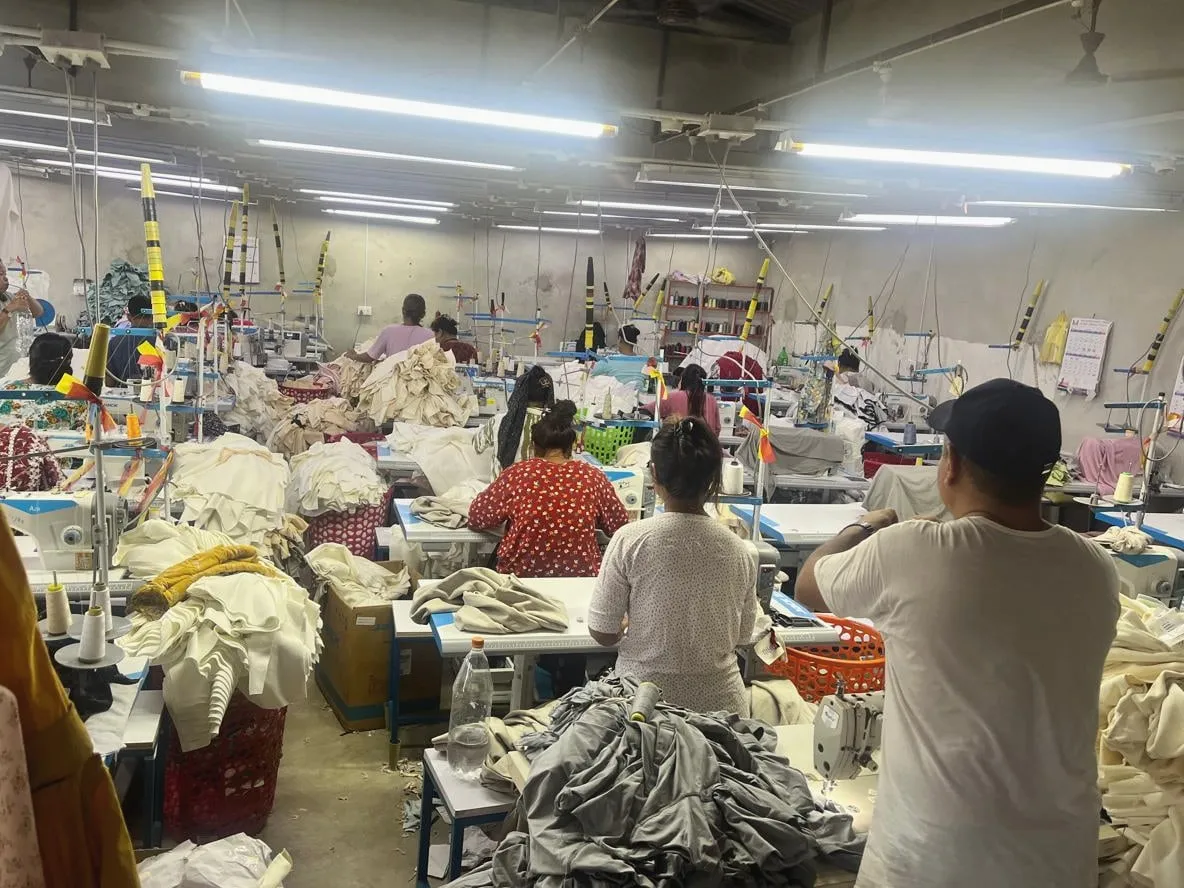
Santosh Rijal runs Trishakti Apparel, the export knitwear factory his family built on three decades in Nepal’s fashion trade. He writes about sourcing, duty and production from the factory floor in Gaindakot.
LinkedIn ↗