How to · Startups
What is a tech pack — and what your factory needs to quote your order
A tech pack is the blueprint your manufacturer builds from. Here’s what goes in each section, a sample measurement table with tolerances, the details that change your HS code, the minimum a factory needs to quote accurately, and the mistakes that cause bad samples.
If a factory has asked you for a “tech pack” and you weren’t sure what they meant, you’re not alone. A tech pack is the technical blueprint of your garment: the document your factory uses to cost it, make the pattern, sew the sample, run bulk production and inspect the finished goods. The better yours is, the more accurate your quote and the fewer surprises between sample and bulk.
What is a tech pack used for?
A good tech pack is used at every stage of an order: costing, pattern making and grading, sampling, bulk production and quality control. The factory prices from it, builds the pattern and sample from it, sews bulk to it and inspects finished garments against it, which is why gaps in it cost money later:
- Costing: fabric weight, trims, decoration and packing all become lines on the price.
- Pattern making and grading: measurements and fit notes become the pattern for every size.
- Sampling: the sample room builds exactly what is written, and nothing that isn’t.
- Bulk production: each operation on the line follows the construction details.
- Quality control: the final inspection measures and checks garments against the approved tech pack and sample.
What goes in a tech pack?
A complete tech pack has nine sections: a cover sheet, flat sketches, a bill of materials, a measurement spec, grading, construction details, colour and artwork, labels and packing, and testing requirements. Each tells the factory something it needs to cost, make or inspect the garment, so leaving one out forces it to guess.
| Section | What goes in it | Why the factory needs it |
|---|---|---|
| Cover sheet | Style number, name, season, size range, colourways, version and date | So everyone works from the same version |
| Flat sketches | Front and back technical drawings with call-outs for seams, trims and details | Shows construction that photos hide |
| Bill of materials | Fabric (composition, construction, GSM with tolerance, yarn, finish), rib, thread, labels, buttons, packaging, with placement and colour | Drives cost, and prevents substitutions |
| Measurement spec | Points of measure, how each is measured, base-size values and tolerances | Fit, and the pass/fail standard at inspection |
| Grading | Size range and the increments between sizes | Consistent fit across sizes |
| Construction | Seam and stitch types, stitch density, neck and hem finish | Durability and appearance |
| Colour and artwork | Pantone references, lab dip standards, vector artwork, placement from fixed points, print or embroidery method | Colour accuracy and decoration quality |
| Labels and packing | Brand label, care and composition label, hangtag, fold, polybag, carton marks | Retail-ready goods and compliant labelling |
| Testing | Shrinkage, colour fastness, pilling, chemical or safety requirements | The standards the fabric and garment must meet |
Commercial details (quantities per size and colour, target price, destination market, delivery date) often travel in a separate order sheet, but the factory needs them to quote.
How should a tech pack measurement table be set out?
Measurements are where most tech packs fall short. Each point of measure needs a clear description of how it is measured, a value for the base size and a tolerance, the amount a finished garment may vary before it fails inspection. An illustrative example for a crew-neck tee, base size M:
| Point of measure | How to measure | M (cm) | Tolerance (cm) |
|---|---|---|---|
| Chest width | 1 cm below armhole, edge to edge | 53 | ±1 |
| Body length | From high point of shoulder to hem | 72 | ±1 |
| Shoulder width | Seam to seam | 46 | ±1 |
| Sleeve length | Shoulder seam to sleeve hem | 21 | ±0.5 |
| Sleeve opening | Edge to edge, flat | 18 | ±0.5 |
| Neck width | Seam to seam, inside | 18 | ±0.5 |
| Neck rib height | Finished | 2 | ±0.2 |
The numbers are an example, not a recommended size chart. What matters is the structure: without “how to measure” and a tolerance, a garment that is 2 cm out becomes an argument rather than a rejection. Our sizing and grading guide covers how to build the full size run.
Which tech pack details change your HS code?
Customs classification is decided by the garment you specify, so some design choices change the duty line. Three to watch are the hem finish on a tee, the pocket, waistband and sleeve details on a polo, and the fibre composition. Each can move the garment to another heading or a different duty rate:
- Hem finish on a tee. Heading 6109 (T-shirts) does not cover garments with a drawstring, ribbed waistband or other means of tightening at the bottom. A tee with a ribbed hem usually moves to another heading.
- Polo details. Headings 6105 and 6106 (knit shirts, including polos) do not cover garments with pockets below the waist or a ribbed waistband or other tightening at the bottom, and 6105 does not cover sleeveless garments.
- Fibre composition. A blend is classified by the fibre that predominates by weight. In the US a cotton T-shirt (6109.10.00) has a general duty rate of 16.5%, a man-made-fibre T-shirt (6109.90.10) 32%.
Put the intended HS code in the tech pack or on the purchase order so any mismatch surfaces before production. The HS code guide has the rates by market; your customs broker confirms the final line.
What does a factory need to quote without a tech pack?
You don’t need a perfect tech pack to get a price. A reference sample or photos, the target fabric, size range, quantities, decoration, labels and packing, destination market and delivery date are enough to start. To quote a knit garment, a good factory needs:
- The garment type and a reference sample, or clear front, back and detail photos.
- Target fabric: composition and GSM, or “please advise”.
- Size range, and whether you have a size chart or need one developed.
- Quantity per style and per colour. Our minimum is 200 pieces per style and colour, with 1,000 pieces in total per order.
- Decoration: print or embroidery, with approximate size and number of colours.
- Labels and packing: your own labels, hangtags, polybag, or plain.
- Destination market, which sets labelling rules, duty position and shipping terms.
- The delivery date you are working towards.
From that, a factory can quote a range and tell you which decisions still move the price.
What tech pack mistakes lead to bad samples?
Six mistakes lead to bad samples: measurements without a measuring method or tolerance, asking the factory to match a reference sample it never received, colour references from paper, low-resolution artwork, changes sent by message rather than as a new dated version, and care labels left as an afterthought. Each one leaves the factory guessing.
- Measurements without a measuring method or tolerance.
- “Match the reference sample” without sending the sample. Photos don’t show stretch, weight or seam construction.
- Colour references from paper. A coated paper Pantone chip does not look the same on cotton jersey. Use textile references or send a physical standard, and approve a lab dip.
- Low-resolution artwork. Send vector files, and state placement from a fixed point such as the high point of the shoulder or the centre front.
- Changes by message. Every change should be a new, dated version of the tech pack.
- Care labels as an afterthought. Care, composition and origin labelling depends on the market, and it is cheapest to get right before labels are ordered. The sample approval checklist shows what to check when the sample arrives.
What happens after you send us your tech pack?
We develop patterns and grading in Optitex CAD, from your tech pack, a sketch or a reference garment, so you don’t need everything perfect on day one. Samples take 7–14 days, and bulk production 25–30 days after sample approval. Final inspection is to AQL 2.5 against the approved spec.
Printing and embroidery are done by trusted partner decorators. See how an order runs, or send us what you have and we’ll tell you what’s missing.
Frequently asked
What is the difference between a tech pack and a spec sheet?
What file formats should a tech pack be in?
Who owns the tech pack and the patterns?
How much does the tech pack affect price?
Can I change the tech pack after the sample is approved?
About the author
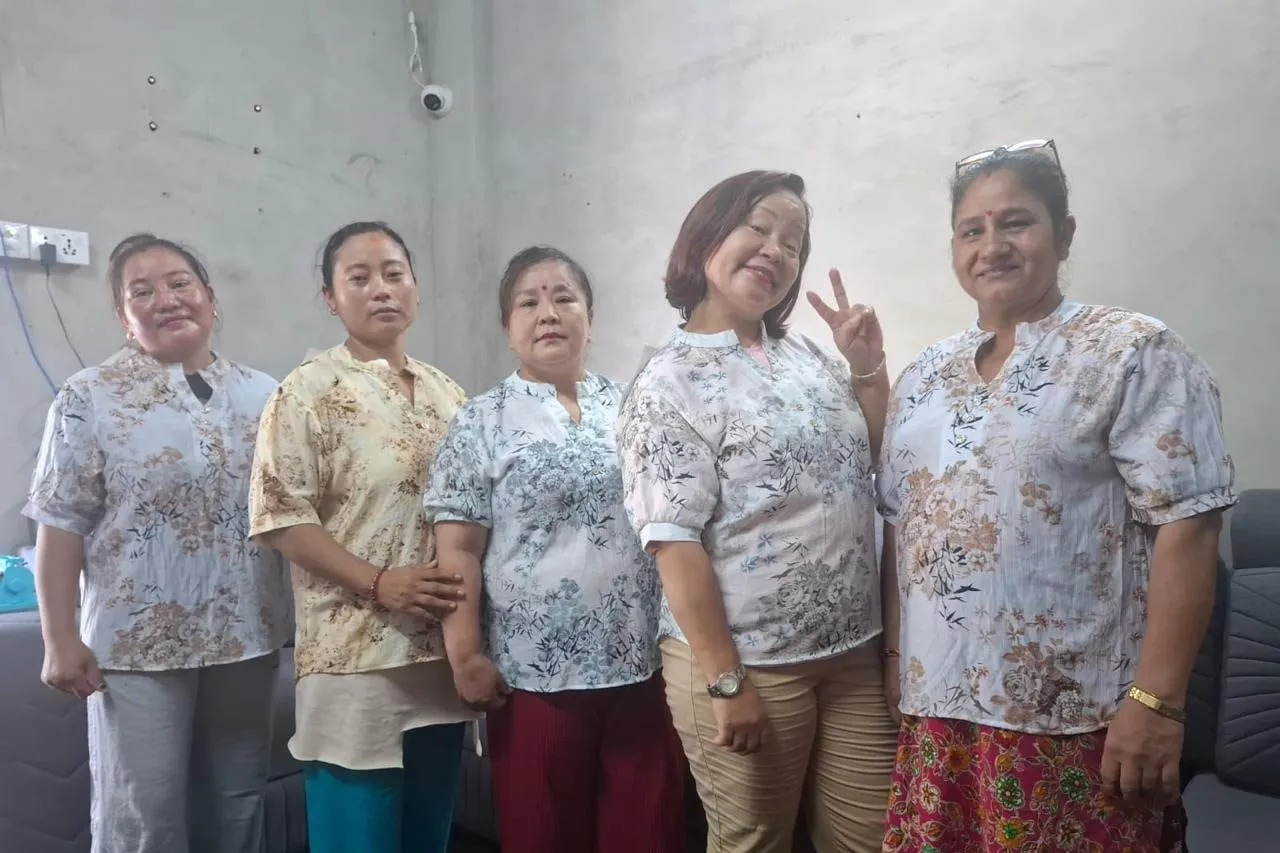
Santosh Rijal runs Trishakti Apparel, the export knitwear factory his family built on three decades in Nepal’s fashion trade. He writes about sourcing, duty and production from the factory floor in Gaindakot.
LinkedIn ↗