Sourcing · Duty-free
Sourcing knitwear from Nepal to Japan: duty-free access as China’s share falls
Japanese buyers diversifying beyond China can source knitwear from Nepal at 0% duty against 7.4–10.9% MFN, under a cut-and-sew origin rule, with small-lot minimums that fit Japanese buying culture.
Japan imports most of its clothing, and Japanese buyers have been spreading production beyond China across Southeast and South Asia. “China plus one” is a familiar idea in Japanese sourcing — and the plus-one list is exactly where Nepal belongs.
How much duty does Japan charge on knitwear from Nepal?
As a least-developed country, Nepal ships knitwear to Japan at 0% under Japan’s duty-free, quota-free scheme for LDCs, against a normal (MFN) duty on knit apparel of roughly 7.4–10.9%. Unlike Japan’s regular GSP, apparel is fully covered. Even Chinese-made garments under RCEP still pay 4.6–6.8% (staged rates to 31 March 2027), while Nepal-made ones pay nothing.
On a knit programme, that’s 7.4–10.9 points against the WTO rate.
The origin rule is the quiet advantage: since April 2015, Japan Customs qualifies Chapter 61 knit garments as originating when they are “manufactured from fabrics” — cut and sew in Nepal is enough, even with imported fabric. That’s the same single-transformation logic as the EU’s scheme, and far easier than the yarn-forward tests some trade agreements impose. How these origin rules work.
What paperwork does a Japanese importer need to claim 0%?
The importer claims the preference with a Form A certificate of origin, which we obtain from Nepal’s Trade and Export Promotion Centre and send with the shipping documents. Very small consignments are exempt from the certificate; check the current threshold with your broker.
Goods may tranship via India as long as the through-documentation is clean — which is the normal way Nepali cargo moves anyway.
How long does the 0% last?
The 0% window is measured in years, not months. Nepal is scheduled to graduate from LDC status on 24 November 2026, and Japan is one of the most generous markets about it: a 2025 amendment extended Japan’s post-graduation grace period from one year to three years, long enough to build and repay a real supplier relationship.
Nepal has also formally requested a deferral: ECOSOC has referred the request to the UN General Assembly, which is due to decide before the scheduled graduation date. Our full LDC-graduation explainer.
What do Japanese buyers demand from a knitwear factory, and how does Trishakti Apparel answer?
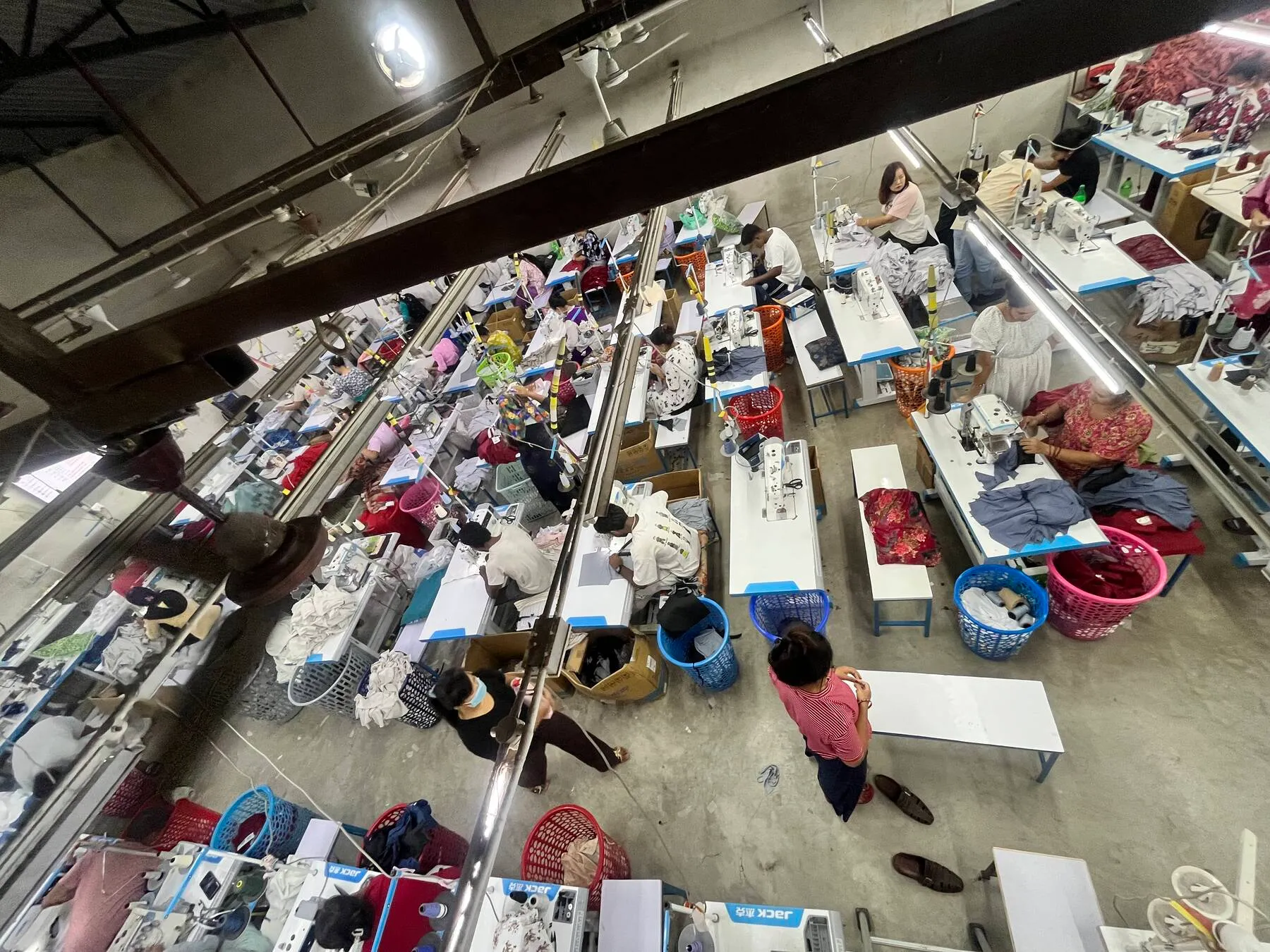
Japanese buyers expect tight quality tolerances with third-party inspection, Japanese-language fibre and care labels using JIS care symbols, JIS sizing and small lots, and typically require needle-detection screening. We welcome buyer-appointed inspection on every order, sew compliant labels in at the factory, grade from your measurement chart, accommodate needle control in QC and start at 200 pieces per style and colour (1,000 pieces per order).
- Quality tolerances: Japanese inspection standards are famously strict — tighter AQLs than Western high-street norms, with third-party inspection expected. We welcome buyer-appointed inspection on every order.
- Labelling: apparel sold in Japan needs Japanese-language fibre and care labels using the JIS care symbols. We sew compliant labels in at the factory to your layout.
- Sizing: Japanese sizing follows its own JIS conventions — we grade from your measurement chart rather than relabelling Western specs.
- Needle safety: Japanese buyers typically require broken-needle control and needle-detection screening; our QC process accommodates this.
- Small lots: Japan’s buying culture favours smaller, more frequent orders — and our minimums of 200 pieces per style and colour (1,000 per order) sit far below the volumes the big hubs demand.
How does a Nepali knitwear factory reach Japanese retail?
Most overseas factories reach Japanese retail through trading companies — from the giant sogo shosha to specialised textile traders — who handle QC coordination, labelling compliance, and financing. We think that’s a feature, not a barrier: a Japanese trading house or mid-size importer looking for a duty-free, small-lot South Asian knit source gets a factory that answers directly.
That factory samples fast by express courier (usually 3–7 days) and ships sea cargo via Kolkata in roughly 5–7 weeks from ex-factory — a shorter lane than Nepal-to-Europe.
How much Nepali clothing does Japan buy today?
Japan bought only about Rs 441 million of Nepali readymade garments in FY 2082/83, sixth among Nepal’s garment markets. That’s not a weakness; it’s headroom. The buyers moving beyond China have already onboarded Bangladesh and India, which also ship to Japan at 0%.
Nepal offers the same duty-free access with smaller minimums, a strong ethical story, and a factory hungry to prove itself on exactly the disciplined terms Japanese buyers set. Who we are, plainly.
Japanese buyers ask more questions before the first order than any market we know — and reorder longer after it than any market we know. That’s a trade we’ll take every time.
See our knit range, or write to us — we’ll respond with specs, certifications status, and samples, in the detail Japanese sourcing deserves.
About the author
Santosh Rijal runs Trishakti Apparel, the export knitwear factory his family built on three decades in Nepal’s fashion trade. He writes about sourcing, duty and production from the factory floor in Gaindakot.
LinkedIn ↗