Sourcing · Duty-free
Sourcing from Nepal to the US: the honest 2026 tariff picture
No spin: Nepal has no duty-free access to the US — a cotton tee pays the standard 16.5%. But as of September 2026, Nepal is also one of the few origins with no additional tariffs stacked on top, while China pays up to ~20 points more. The verified state of play, date-stamped.
We tell EU, UK, and Canadian buyers a duty-free story. We won’t pretend the US is the same: Nepal has no preferential apparel access to the United States. A Nepali cotton t-shirt pays the standard MFN rate of 16.5% — the same base rate as any WTO member. But 2026’s tariff turmoil has quietly produced something unusual: as of this writing, Nepal is one of the few garment origins with nothing stacked on top of that base rate. Here’s the verified picture, dated 24 September 2026 — because in this year, dates matter.
What is the US tariff on clothing from Nepal in 2026?
Nepal has no preferential apparel access to the United States, so Nepali knitwear pays the standard MFN rate. A cotton t-shirt (HS 6109.10) or cotton sweatshirt/hoodie (6110.20) pays 16.5%, a cotton knit polo (6105.10) 19.7%, and a synthetic knit t-shirt (6109.90.10) 32%. These are the stable facts: they won’t change with court rulings.
| Product from Nepal | US MFN duty |
|---|---|
| Cotton t-shirt (HS 6109.10) | 16.5% |
| Cotton sweatshirt/hoodie (6110.20) | 16.5% |
| Cotton knit polo (6105.10) | 19.7% |
| Synthetic knit t-shirt (6109.90.10) | 32% |
Two takeaways hide in that table. First, the cotton-versus-synthetic gap is enormous — about 16 points — and it’s the one duty lever a US buyer fully controls; garments classify by chief fibre weight, so a 60/40 cotton-poly tee counts as cotton. Second, the Nepal Trade Preference Program that expired at the end of 2025 never covered mainstream knit tees and polos anyway — its lapse changed less than headlines suggested, and it had not been renewed as of September 2026.
Which extra US tariffs apply to garments in 2026, and is Nepal affected?
Earlier in 2026 a temporary 10% tariff under Section 122 applied on top of the base rates. It expired on 24 July 2026 and was replaced the same day by Section 301 duties of 10–12.5% on goods from 60 economies linked to forced-labour import concerns — including China, Vietnam, Bangladesh, and India. Nepal is not on that list.
How does the total US duty on a Nepali tee compare with China, Vietnam, Bangladesh and India?
As of 24 September 2026, the approximate total US duty on a cotton tee is 16.5% from Nepal (MFN only), about 29% from Vietnam, about 26.5% from Bangladesh or India, and up to about 36.5% from China (MFN plus existing measures plus the new action). These gaps rest on current US tariff policy and could change.
| Origin | Approx. total on a cotton tee (Sept 2026) |
|---|---|
| Nepal | 16.5% (MFN only) |
| China | up to ~36.5% (MFN + existing measures + new action) |
| Vietnam | ~29% |
| Bangladesh / India | ~26.5% |
Said plainly: as of 24 September 2026, Nepal holds a 10–20 point duty advantage over the major Asian garment origins in the US market — the mirror image of its usual position. And said just as plainly: this could change. US tariff policy has moved fast in 2026, and if the new duties are changed or removed, the differential narrows toward zero. Build a US sourcing decision on the stable 16.5% and treat today’s gap as upside, not foundation, and confirm current duties with your customs broker before each order.
What does Nepal offer US buyers if not duty-free access?
For US buyers, Nepal’s case isn’t duty-free — it’s cotton knits at a fair base rate with no extra tariff on top (as of September 2026), low minimums no mega-hub will match, at prices competitive with origins that currently pay 10+ points more.
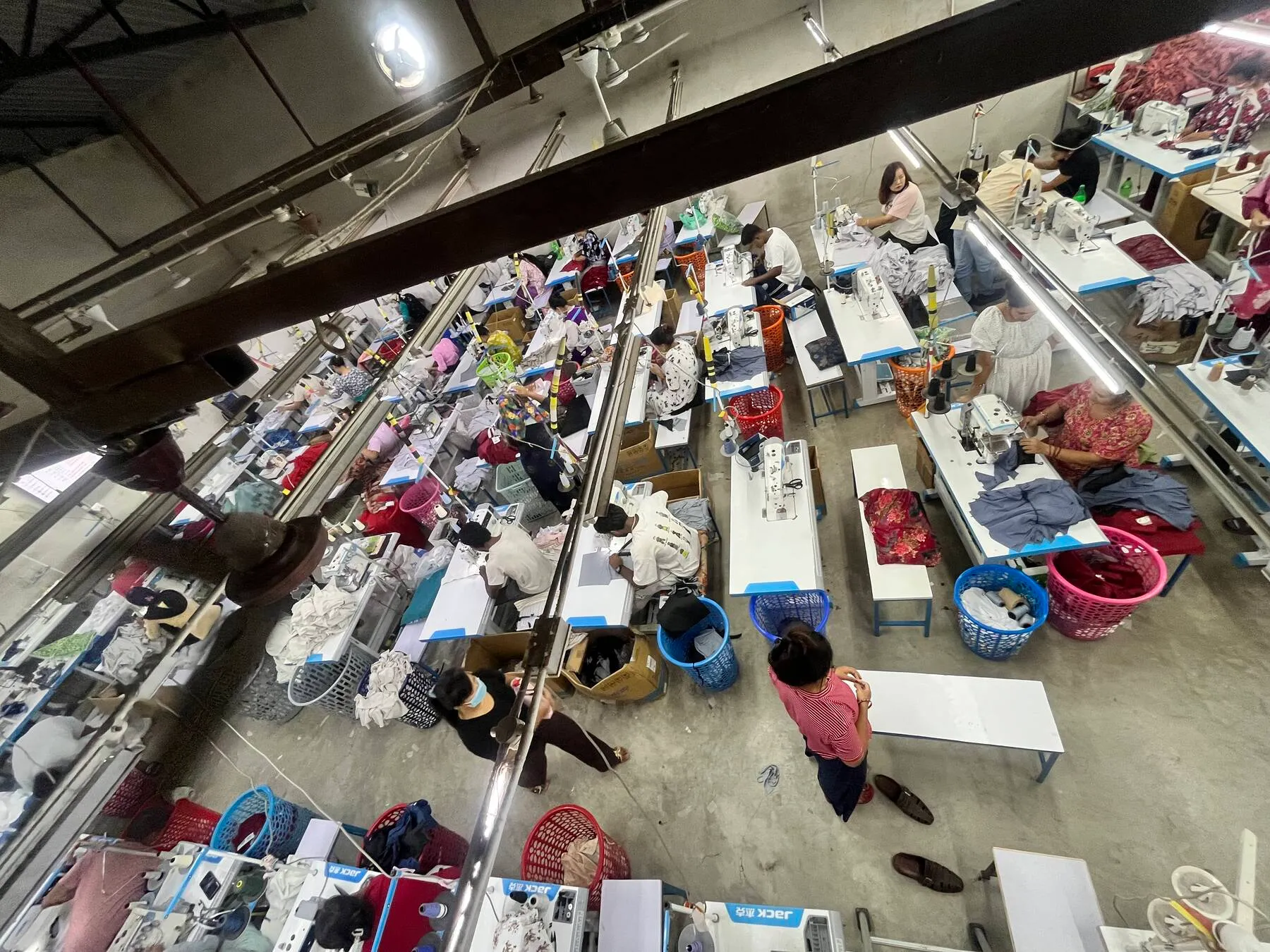
For brands selling into the EU, UK, or Canada as well, the same production run ships to those markets at 0%. That story is here. We date-stamp our tariff claims and update this post as US tariff policy changes — ask us for the current picture when you inquire, and we’ll give it to you straight.
We’d rather publish the honest number than the convenient one. If the US tariff landscape shifts next quarter, this page will say so — that’s the standard we’d want from our own suppliers.
See our cotton knit range, or ask us for a landed-cost quote to your US port, calculated at the rates in force the week you order.
About the author
Santosh Rijal runs Trishakti Apparel, the export knitwear factory his family built on three decades in Nepal’s fashion trade. He writes about sourcing, duty and production from the factory floor in Gaindakot.
LinkedIn ↗