Duty-free · Sourcing
How EU, UK & Canadian buyers save import duty sourcing garments from Nepal
Nepal’s LDC status means knit garments enter the EU, UK, and Canada at 0% import duty under single-transformation rules — even with imported fabric. Here’s how it works, and the 2026 window to plan for.
If you import knit garments — t-shirts, polos, jersey — into the EU, UK, or Canada, where you source them changes your landed cost before you’ve negotiated a single unit price. Sourcing from Nepal can mean 0% import duty, versus the standard rate you’d pay from most countries. Here’s exactly why, and the timeline every buyer should understand.
Why are Nepal-made garments duty-free, when China’s are not?
Because Nepal is classified as a Least Developed Country (LDC). Major economies grant LDCs preferential, usually zero, import duty to support their development — through the EU’s Everything But Arms (EBA) scheme, the UK’s Developing Countries Trading Scheme (DCTS), and Canada’s Least Developed Country Tariff (LDCT).
For a cotton knit t-shirt, the standard EU (MFN) import duty is roughly 12%. From Nepal under EBA, it’s 0%. The UK and Canada mirror that duty-free access for LDC-made garments.
Do garments made from imported fabric still qualify for 0% duty?
Yes. A common misconception is that using imported fabric disqualifies the duty-free origin. For LDC garments, it does not. The EU, UK, and Canada apply single-transformation rules of origin: cutting and sewing the garment in Nepal is enough for it to count as Nepal-made.
Canada’s rule (updated January 2025) is the most generous — a garment “cut, or knit to shape, and sewn or otherwise assembled” in an LDC qualifies, whatever the origin of the fabric.
In practice, the factory supplies the origin proof — for the EU, a statement on origin on the invoice from a REX-registered exporter; for the UK, an origin declaration — and your goods clear at the preferential rate.
Are Nepal-made garments duty-free into the United States?
No. The US does not offer duty-free access for knit tees and polos from Nepal. The Nepal Trade Preference Program expired on 31 December 2025 and has not been renewed; US GSP has been lapsed since 2020 and excludes apparel in any case. Nepali knitwear therefore enters at standard MFN duty.
Be clear-eyed here, because this is where a lot of sourcing content is misleading. Standard MFN duty on knit tops is substantial, and it comes on top of whatever trade measures are current. US tariff policy has moved repeatedly through 2026, so confirm the live rate with your customs broker rather than trusting any published figure, including ours.
| Market | Standard duty on knit tops | From Nepal | Origin paperwork we supply |
|---|---|---|---|
| EU | 12% | 0% (EBA) | REX statement on origin |
| UK | 12% | 0% (DCTS) | Origin declaration on the invoice |
| Canada | 18% | 0% (LDCT) | Form B255 |
| Japan | ~9% (7.4–10.9%) | 0% (LDC preference) | Form A |
| USA | 16.5% cotton tee · 32% synthetic | Same — no preference | — |
How much duty does sourcing from Nepal save on a real order?
Take 2,000 hoodies at $8.00 ex-factory: a $16,000 order. From China into the UK, duty adds about $1,920; into Canada, $2,880. From Nepal, zero duty into either market — the same garments land $1–1.50 per piece cheaper before any price negotiation happens.
On knit programmes that repeat every season, this is the quiet line item that funds better fabric or better margin. The full cost anatomy of a hoodie.
Market-by-market detail lives in our country guides: the UK (paperwork lighter than you think), Canada (the biggest single gap at 18%), Japan, Germany, France, and the Netherlands.
What happens to duty-free access when Nepal leaves LDC status?
Nepal is scheduled to graduate from LDC status in November 2026. The EU and UK grant a transition period keeping duty-free access to at least 2029. After that the two markets differ: garments from imported fabric may no longer qualify in the EU, while the UK rule is not expected to tighten.
In the EU, Nepal would move to standard GSP, where the garment rule is stricter (the fabric must also be made in the country), so garments from imported fabric may no longer qualify. The UK is different: since 1 January 2026 its Enhanced Preferences tier, where Nepal is expected to move, uses the same single-transformation garment rule, so the UK rule is not expected to tighten. See single vs double transformation. Translation: there’s a real window to lock in duty-free sourcing now, and a good manufacturing partner will help you plan for the transition.
Duty rates and rules of origin depend on your market and your product’s exact HS code, and LDC preferences change over time. Always confirm the current rule for your destination and product before you commit.
Is sourcing from Nepal worth it for EU, UK and Canadian buyers?
If your market is the EU, UK, or Canada, sourcing knit basics from Nepal can remove ~12% of duty from your landed cost, legitimately and with proper documentation. If it’s the US, the tariff picture has moved repeatedly through 2026 — our date-stamped US guide has the current state.
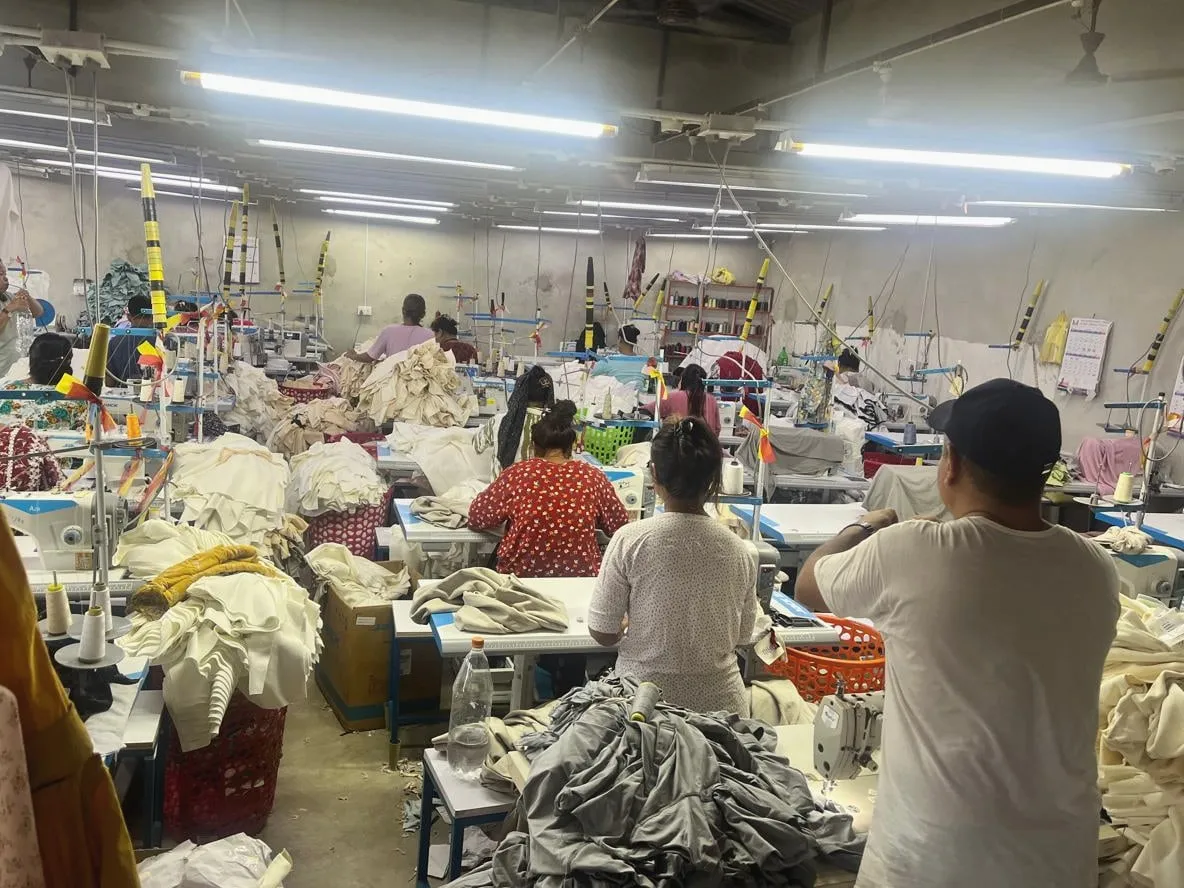
Either way, it’s worth a conversation. See our full duty-free breakdown, or tell us your market and we’ll confirm exactly what applies to your program.
Frequently asked
Which countries can import Nepali garments duty-free?
Why are Nepal-made clothes duty-free in Europe?
How does a buyer claim the 0% duty?
How long will Nepal’s duty-free access last?
About the author
Santosh Rijal runs Trishakti Apparel, the export knitwear factory his family built on three decades in Nepal’s fashion trade. He writes about sourcing, duty and production from the factory floor in Gaindakot.
LinkedIn ↗