Sourcing · Private label
Schoolwear sourcing after the three-item cap: a guide for UK uniform retailers
England’s new cap on branded school uniform items concentrates volume into badged sweatshirts and polos — and puts retailer margins under pressure. What the rules change, what schoolwear brands actually are, and when sourcing your core school colours direct from a factory starts to make sense.
UK schoolwear is heading into its biggest shake-up in years. The Children’s Wellbeing and Schools Act 2026 caps compulsory branded uniform items at three per pupil (four for secondary schools if one is a tie), expected to apply from September 2026. For the independent retailers and direct-to-school suppliers who clothe most of Britain’s schoolchildren, that changes the economics of the trade: fewer branded lines — but the volume concentrating into exactly the garments that survive the cut. Almost always, that means the badged sweatshirt and the badged polo.
What does the three-item cap actually change for retailers?
The 2026 Act hardens guidance into law: three compulsory branded items, PE kit included. Schools will keep the pieces that carry identity — and parents will buy generic trousers and shirts anywhere. For a retailer, the branded knitwear that remains has to work harder: more volume per line, more price scrutiny per garment, and your margin concentrated in fewer SKUs.
Since the 2021 statutory guidance, schools have already been pushed to keep branded items minimal — the Schoolwear Association’s survey put the average compulsory secondary uniform at about £92 per pupil, down year on year.
Where do “British schoolwear brands” actually make their garments?
The wholesale brands the trade buys from are import and stock businesses with Far East supply chains: one leading brand’s buying team visited factories across China, Laos, Vietnam and Cambodia in a single year; another maintains sourcing teams in China, Bangladesh and Sri Lanka; a third produces in Bangladesh and Egypt.
There’s nothing wrong with that — it’s how year-round stock programmes work — but it means the garments already travel from Asia, with the brand’s and wholesaler’s margins added before the retailer decorates and sells. Sourcing direct is the same supply chain, minus the middle.
When does direct sourcing make sense for a schoolwear retailer?
The stock wholesalers earn their place: next-day replenishment in season, no minimums, deep colour ranges. Factory-direct can’t replace that for odd sizes and top-ups. Where it wins is your core lines — the school-colour sweatshirts and polos you sell every single year in predictable volume:
- Most factories courting the UK schoolwear trade quote minimums of 1,500–5,000 pieces per style — wholesale-scale, not retailer-scale. Ours start at 200 pieces per style and colour, with 1,000 in total per order — a large school’s annual intake, or one core colour pooled across your school list.
- Duty is 0% on Nepal-made knits into the UK, confirmed through the transition to at least 2029 — with the UK’s scheme built to keep garment access as countries develop.
- Garments arrive badged-ready for your in-house embroidery: taped necks, twin-needle seams, tear-away or your own labels.
- An October-to-summer calendar fits schoolwear’s rhythm: forward-order after The Schoolwear Show, produce over winter, land stock well before the August peak.
What must a schoolwear factory get right?
Two things: colour continuity and ethical sourcing. A school jumper must match last year’s, which takes approved lab dips against a retained shade standard, one dye lot per order and the recipe kept on file. Schoolwear Association members commit to sourcing that meets national law or ILO standards, whichever is higher.
First, colour continuity. A school jumper is a multi-year promise: this September’s garment must match last September’s, or the retailer takes the complaint. That is a dye-management discipline — approved lab dips against a retained shade standard, one dye lot per order, and the recipe kept on file so next year’s batch matches. It’s the single most important question to ask any factory quoting schoolwear, and we’d rather show you our answer on a repeat order of samples than just claim it.
Second, ethical sourcing. The Schoolwear Association’s Code of Practice commits members to sourcing that meets national law or ILO standards — whichever is higher — and the major wholesalers set social audits as their supplier minimum. We hold ourselves to the same bar and will tell you plainly where our certifications stand today, including timelines — our compliance status, stated honestly. Childrenswear safety rules, including cord and drawstring restrictions, are built into specs at the design stage.
What specification should school polos, sweatshirts and PE tops have?
The trade-standard school polo is 65/35 poly-cotton at 200–220 gsm with a flat-knit collar, where reactive dyeing for wash-fast colour and low pilling matter most. The sweatshirt is 260–310 gsm fleece with a crew neck and taped back neck, needing shade match year over year and shrinkage control. PE tops are polyester or poly-cotton knits.
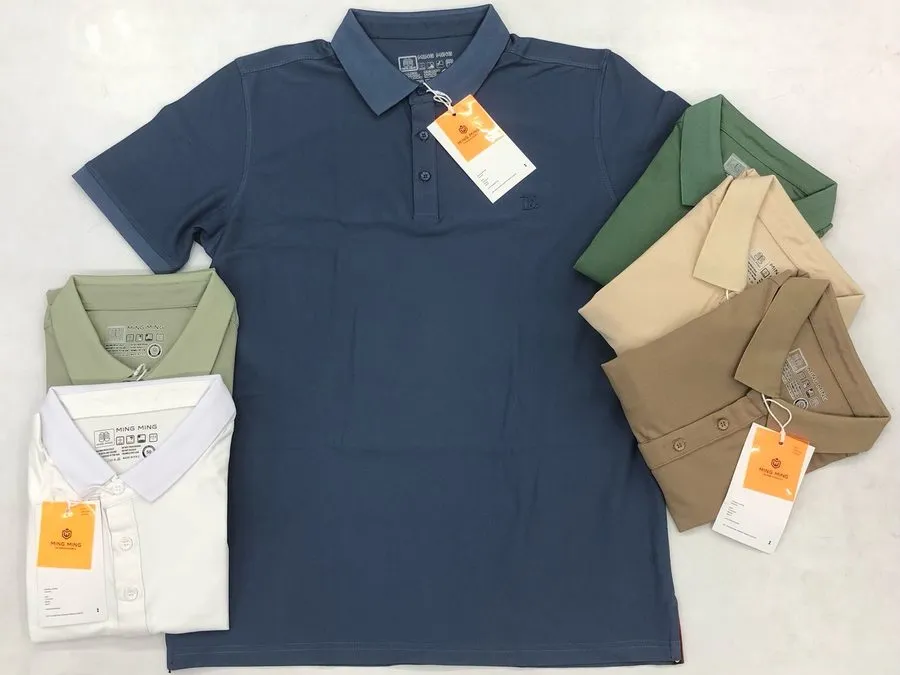
| Garment | Trade-standard spec | What matters most |
|---|---|---|
| School polo | 65/35 poly-cotton, 200–220 gsm, flat-knit collar | Reactive dyeing for wash-fast colour; low pilling |
| School sweatshirt | 260–310 gsm fleece, crew neck, taped back neck | Shade match year over year; shrinkage control |
| PE / sports tops | Polyester or poly-cotton knits | Durability through weekly wash cycles |
The cap shrinks the branded basket — which makes every remaining branded garment more important to get right, and more worth sourcing well. Fewer lines, better margins, no compromise on the promise to match last year’s colour.
We make school-colour polos, sweatshirts, and sports knits from 200 pieces per style and colour (1,000 per order), with duty-free UK entry and your labels sewn in. (Running broader workwear too? Our corporate-uniform guide.) Here’s how importing from Nepal works step by step — or send us your two best-selling school colours and we’ll quote them landed against your current wholesale price.
About the author
Santosh Rijal runs Trishakti Apparel, the export knitwear factory his family built on three decades in Nepal’s fashion trade. He writes about sourcing, duty and production from the factory floor in Gaindakot.
LinkedIn ↗