Quality · Private label
French terry vs brushed fleece: specifying sweatshirt fabric like you mean it
Terry and fleece start life on the same knitting machine — the difference is what happens at finishing, and it changes warmth, breathability, print behaviour, and durability. Constructions (why 3-thread fleece is the premium marker), GSM bands, blends, dye methods, and what decorators should spec.
Here’s the first thing to know about sweatshirt fabric: French terry and brushed fleece usually begin as the same knit on the same machine. The difference is finishing — terry keeps its little back loops; fleece has those loops brushed into a soft insulating pile. That one decision cascades into everything buyers care about: warmth, breathability, structure, print behaviour, pilling. And it exposes the buying mistake this guide exists to fix: fabric gets chosen by first touch in a showroom, but customers live with wash fifty and print number one. Spec for those.
Is French terry or brushed fleece better for a sweatshirt?
Neither is “better.” French terry (loopback) breathes through its open loops, stays denser and flatter, holds its shape at elbows, and suits three-season wear. Brushed fleece traps air in its pile and insulates far better, at the cost of some breathability and a higher pilling tendency on the brushed side. The right answer is your customer’s climate and use.
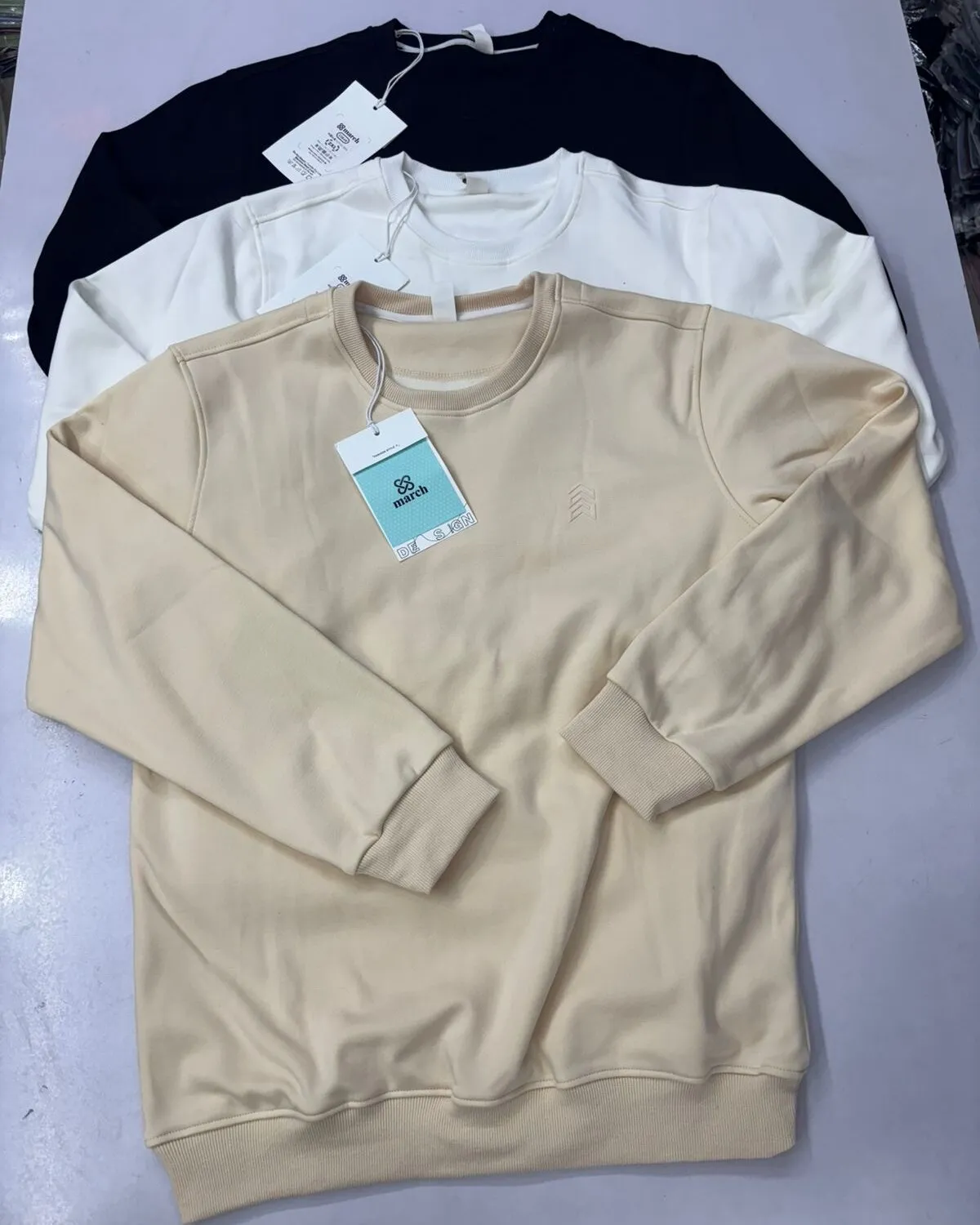
Terry is the fabric of joggers, lighter crews, and premium loopback hoodies, while a 280 gsm fleece can out-warm a heavier terry. Cold-climate hoodies want fleece; year-round range staples often want terry. Climate and use are exactly the conversation a factory should have with you before quoting.
What makes 3-thread fleece the premium construction?
Quality sweatshirt fleece is knitted from three yarns — a face yarn, a binding yarn, and the back loop yarn that gets brushed. The binding yarn acts as a barrier between back and face, which is why 3-thread fleece keeps a smooth, consistent jersey face even after brushing.
That is also why it’s the construction of choice for screen printing and the one high-end blank brands specify. Two-thread fleece is lighter and cheaper, with less separation between face and pile. When a hoodie quote seems mysteriously cheap, “which construction?” is one of the questions that finds the money. The full hoodie cost breakdown.
Which weight and blend should you choose for sweatshirt fabric?
The standard hoodie band is 280–350 gsm, with 280–300 the everyday workhorse; light French terry runs 200–280 gsm and heavyweight premium fleece 350–450 gsm. On blends, polyester improves shrink resistance and durability but increases pilling tendency, and shrink control comes from compacted fabric, a process rather than a fibre.
| GSM | What it is |
|---|---|
| 200–280 | Light French terry — layering pieces, joggers, summer crews |
| 280–350 | The standard hoodie band; 280–300 is the everyday workhorse |
| 350–450 | Heavyweight/premium — structure and drape; the streetwear zone |
| 450+ | Ultra-heavy statement fleece |
On blends, two facts that surprise buyers. First: polyester content improves shrink resistance and durability — but increases pilling tendency, because poly fibres anchor the pills; the counter-measures are combed long-staple cotton, singeing, and proper heat-setting at the mill. Second: shrink control is a process, not a fibre — compacted (mechanically pre-shrunk) fabric is what keeps a printed hoodie’s artwork registered and its fit intact after home laundering. Both belong in your spec, neither shows in a showroom.
How does the dye method affect sweatshirt reorders?
Piece-dyed fabric (dyed on the roll) gives flat, repeatable colour — the right default for uniform and promo programmes where this year’s navy must match last year’s. Garment-dyed fleece (sewn first, dyed after) gives the soft, lived-in, pre-shrunk character the premium casual market loves — with lot-to-lot variation as the honest trade-off.
That makes garment-dyed fleece better suited to drops than to programmes. Heathers and marls need yarn-dyed fibre. The point: dye method is a commercial decision about how your brand reorders, not just an aesthetic one. (The aspirational reference, for the curious: Japan’s handful of surviving loopwheel machines, knitting a metre an hour of the world’s most coveted fleece — the benchmark modern tight-knit heavyweights chase.)
What should decorators specify on fleece?
Specify 3-thread construction for a clean, consistent print face, and compacted fabric with an agreed shrinkage tolerance so registration survives the wash. For embroidery, choose a stable, heavier fleece with proper cut-away backing and a topping over brushed surfaces. Ask for one dye lot per order, with lab dips retained for reorders.
- 3-thread construction for a clean, consistent print face.
- Compacted fabric with agreed shrinkage tolerance — registration survives the wash.
- For embroidery: a stable, heavier fleece takes dense left-chest and back designs; proper cut-away backing underneath and a topping over brushed surfaces keep stitches from sinking into the pile.
- One dye lot per order, lab dips retained for reorders. The full blanks-direct guide.
Every sweatshirt feels good on day one — brushing guarantees it. The spec sheet is where you decide how it feels on day two hundred.
We cut and sew terry and 3-thread fleece garments from fabric knitted and compacted to your spec by established mills, in your blend, weight and colour. See our fleece range or send a reference garment — we’ll tell you exactly what it’s made of, and quote it. Importing into Korea? Nepal-made fleece can enter at 0% duty instead of 13%.
Frequently asked
What is brushed fleece?
What is the difference between brushed and unbrushed fleece?
About the author
Santosh Rijal runs Trishakti Apparel, the export knitwear factory his family built on three decades in Nepal’s fashion trade. He writes about sourcing, duty and production from the factory floor in Gaindakot.
LinkedIn ↗