Sourcing · Duty-free
Sourcing knitwear from Nepal: a guide for French buyers — duty, EPR, and the paperwork that matters
France already buys Nepali garments, textiles are about 80% of its imports from Nepal, and it has run textile EPR since 2007. What French importers, distributors and brands need to know about sourcing duty-free from Nepal — including the Refashion déclaration your supplier can make painless.
France is one of Europe’s great apparel markets, and Nepal is already on the French map: France imported about Rs 462 million of Nepali readymade garments in FY 2082/83, and textiles make up around 80% of what France imports from Nepal — knitwear, garments, carpets, pashmina. This guide covers what a French importer, distributor, or brand should know about going one step further and sourcing knits directly — including the compliance layer France adds.
What duty and import VAT do French buyers pay on knitwear from Nepal?
Nepal-made knits enter the EU at 0% duty under Everything But Arms versus the 12% MFN rate on Chinese-made garments (and 9.6% on Indian-made under standard GSP), claimed via a REX statement on origin. French import VAT is a non-event since 2022: the 20% is automatically reverse-charged on your CA3 return (autoliquidation) rather than paid at the border.
Single-transformation rules apply: cut and sew in Nepal qualifies even with imported fabric. The reverse charge means no cash-flow hit, provided you give customs a valid French intra-EU VAT number. Nepal’s LDC graduation is scheduled for 24 November 2026 (deferral requested); EBA runs for three years after it takes effect, so at least until the end of 2029, then standard GSP unless Nepal qualifies for GSP+. Full duty breakdown.
What is Refashion, France’s textile EPR, and why does your factory choice matter?
France has run textile EPR since 2007. If you place new clothing on the French market — as importer or own-brand seller — you are the “metteur en marché”: you contribute through Refashion, the approved eco-organisme, on the garments you place on the market. Your factory can’t pay the eco-contribution for you, but it decides whether your déclaration is painless.
The money is small; the structure matters:
- Declared properly by product category, the contribution per garment is small; check the current barème with Refashion.
- Declaring without clean per-category product data is where it gets harder and more expensive, so the data matters.
- Products that meet environmental criteria can earn bonuses.
- Not registering is the real risk, so register before your first shipment.
Here’s the supplier connection: we supply per-style category data, fibre composition, and certification documents in the shape the barème needs, so your Refashion filing is an hour’s work at the detailed rate, not a flat-rate surrender.
What do France’s AGEC label and traceability rules require from your factory?
French law adds two more layers: the Triman logo with Info-tri sorting signage on the product or hangtag, and — for larger sellers — a traceability display naming the country of knitting, dyeing/printing, and making-up for each garment. Both are straightforward when the factory cooperates and painful when it doesn’t.
We print Triman/Info-tri on labels and hangtags to your layout, and we certify each processing stage of your garment in writing, because we actually know where each stage happened.
Can French promo and workwear distributors buy blanks factory-direct from Nepal?
Yes. France’s promotional-products trade (l’objet média) and its workwear market both buy textiles in quantity. For the distributors and decorators serving them, the blanks logic applies in full: repeat styles, factory-direct, your label sewn in, from 200 pieces per style and colour (1,000 per order). Our guide to buying blanks direct.
What is working with Trishakti Apparel like for French buyers?
We’ll be honest about language: our working language is English, and we make it easy — precise written specs, documented samples, everything confirmed par écrit. What we share with French buying culture is the part that matters: relationships built carefully, argued with evidence, and kept for years.
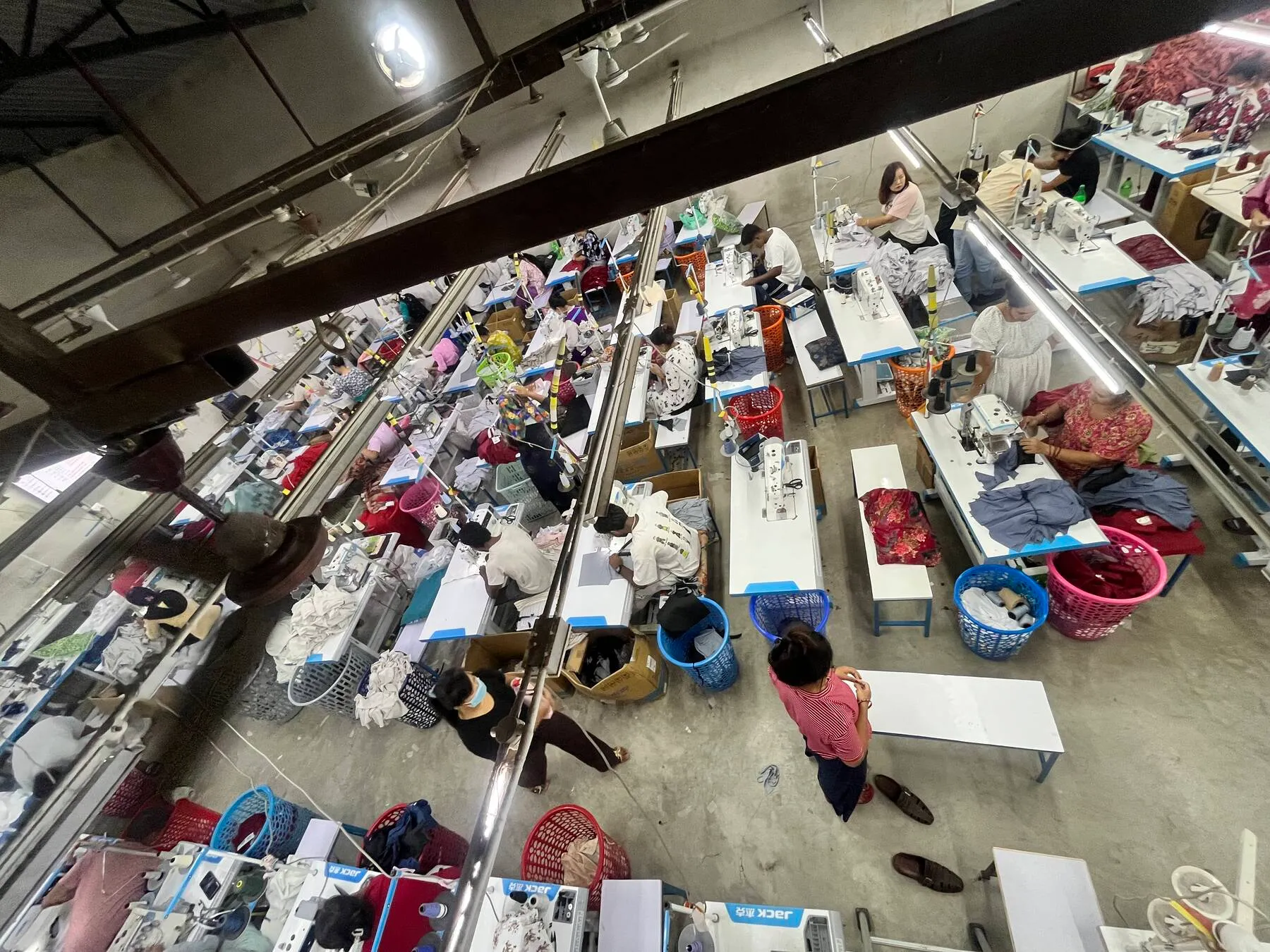
Payment on standard exporter terms; sea freight via Kolkata to Le Havre/Marseille in roughly 6–8 weeks from our gate; samples by express courier in usually 3–7 days.
France asks a lot of a garment’s paperwork — eco-contribution, Triman, traceability. That’s not a burden for us; it’s the easiest place in the world to prove we’re the kind of supplier who has the answers written down before you ask.
See our knitwear range, or write to us with your styles and quantities — we’ll quote landed, with the Refashion category data and AGEC documentation included.
About the author
Santosh Rijal runs Trishakti Apparel, the export knitwear factory his family built on three decades in Nepal’s fashion trade. He writes about sourcing, duty and production from the factory floor in Gaindakot.
LinkedIn ↗