Sourcing · Duty-free
The UK importer’s guide to sourcing knitwear from Nepal
Duty-free until at least 2029 — with a UK scheme structured so exporters keep access as their country develops. The complete UK picture: what the DCTS actually requires (less than you think), EORI, CDS and Postponed VAT Accounting, what UK law does and doesn’t require on labels, and why Nepal deserves a place on a UK sourcing list.
The UK is already Nepal’s third-largest garment market, at about Rs 1.13 billion in FY 2082/83, yet that is small next to what the UK buys from Bangladesh at the same 0% duty. Same region, same product family, a fraction of the volume. That gap is either a warning or an opportunity, and this guide gives a UK importer everything needed to decide: the duty position, the actual paperwork, the import mechanics, and the labelling rules as they really are.
What duty does Nepal-made knitwear pay in the UK?
Nepal-made knitwear enters the UK at 0% under the Developing Countries Trading Scheme, against the 12% third-country rate a Chinese-made garment pays. Nepal’s 0% runs through the LDC transition to at least 2029, and the UK has deliberately structured the DCTS so garment exporters keep preferential access as their country develops through the scheme.
That is the fact that makes the UK our most durable market: this isn’t a short-term window, and we’ll set out our exact origin position in writing for your compliance team. Honest fine print: since the UK–India CETA took effect on 15 July 2026, Indian knitwear also enters at 0% — so our UK case against Indian suppliers rests on minimums and service, not duty.
What paperwork does the DCTS require?
The DCTS is refreshingly simple. There is no exporter registration, no REX number, no stamped certificate — the exporter (us) makes an origin declaration on the commercial invoice with the required data elements, and it stays valid for two years. Goods route via Indian ports, and we hand you the transport documents for every shipment.
How do you import knitwear from Nepal into the UK?
Importing into the UK takes four steps: get an EORI number from HMRC, have your freight forwarder or customs agent file the customs declaration on CDS, handle import VAT (VAT-registered importers can use Postponed VAT Accounting), and use the right commodity codes, which we put on our documents.
- EORI number: you need one from HMRC to import. One-time.
- Customs declaration: your freight forwarder or customs agent files it on CDS. You never touch the system yourself.
- Import VAT: if you’re VAT-registered, you can use Postponed VAT Accounting: import VAT is declared and reclaimed on the same VAT return, so nothing is paid at the border.
- Commodity codes: knit t-shirts are heading 6109, sweatshirts and hoodies 6110, polos 6105 — we put the codes on our documents so your agent isn’t guessing.
What does UK law require on a clothing label?
UK law requires less than most importers assume. The mandatory legal core is fibre composition, in English, using the permitted fibre names, durable and legible. Care labels and country of origin go beyond that legal core, but we sew both as standard.
For product safety, we hand over fabric test reports and full traceability with every order, so your file is complete before anyone asks. Full labelling guide here.
Which UK buyers does Trishakti Apparel suit best?
The UK buyers we serve best: schoolwear suppliers facing the new branded-items cap, decorators and promo distributors moving repeat styles factory-direct, and small brands that need low-MOQ runs from 200 pieces per style and colour a Bangladeshi mega-factory won’t take. Nepal belongs on a UK sourcing map alongside Bangladesh and India.
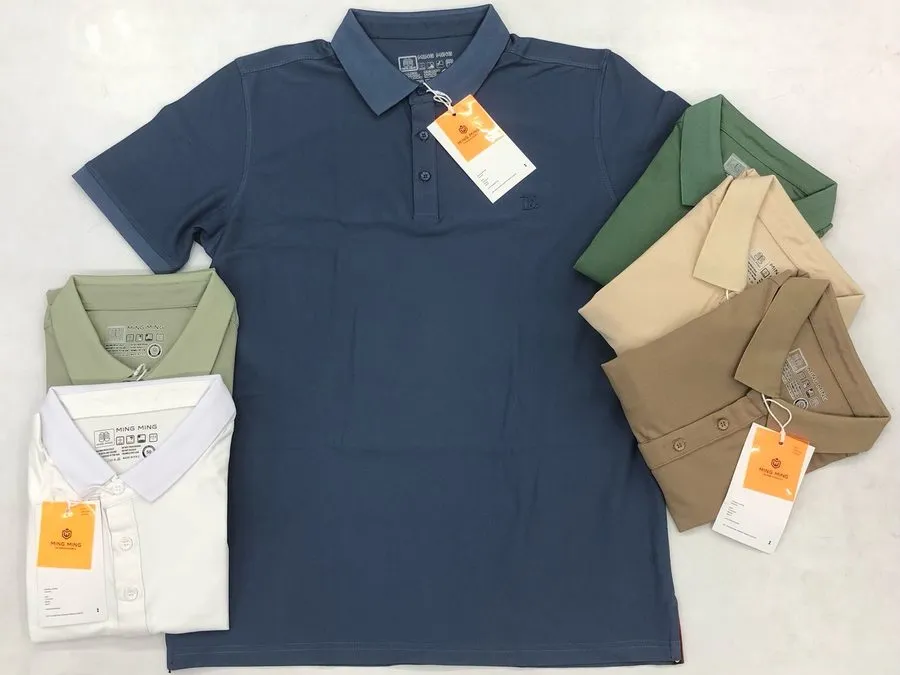
Nepal’s small share of UK knitwear isn’t a verdict on Nepali knitwear — it’s a measure of how few UK buyers have looked. The duty is zero, the paperwork is one invoice declaration, and the factory answers the phone.
Our UK buyer page has the DCTS specifics at a glance, the step-by-step walkthrough covers the full journey — or send us a style and quantity — we’ll quote it landed at your door, duty at zero, with the origin declaration included.
About the author
Santosh Rijal runs Trishakti Apparel, the export knitwear factory his family built on three decades in Nepal’s fashion trade. He writes about sourcing, duty and production from the factory floor in Gaindakot.
LinkedIn ↗