Private label · Pricing
Merch beyond print-on-demand: when creators and bands should go factory-direct
A print-on-demand hoodie costs $28–37 per unit, forever. At drop volumes, a fully custom heavyweight hoodie with your woven label costs less than that catalogue blank. The real maths of creator and tour merch — POD, bulk printing, and factory-direct — and when each one is right.
Print-on-demand is a brilliant way to start selling merch: no inventory, no risk, live in a day. It is also, structurally, a terrible way to keep selling it once your audience shows up. Here’s the number that should reframe your thinking: a POD hoodie runs roughly $28–37 all-in per unit — forever — while at 300–500 pieces, a fully custom heavyweight hoodie with your own woven label comes in below that. Past a certain volume, the custom garment is cheaper than the catalogue blank. This guide walks the whole ladder.
What are the three ways to produce merch?
There are three rungs: print-on-demand, at $21–30 base per hoodie plus per-order shipping, where you control only the artwork; bulk-printed blanks, at about $13–18 from 100 pieces, adding blank choice and print method; and factory-direct custom, at about $18–24 for 300–500 pieces, where you control fabric, fit, GSM, labels and packaging.
| Model | Typical hoodie cost | What you control |
|---|---|---|
| Print-on-demand | $21–30 base + per-order shipping | The artwork. Nothing else. |
| Bulk-printed blanks | ~$13–18 at 100+ pcs | Artwork, blank choice, print method |
| Factory-direct custom | ~$18–24 at 300–500 pcs (less from Nepal) | Everything: fabric, fit, GSM, labels, packaging |
The industry’s own advice is a funnel: test designs on POD, move proven sellers to bulk, and graduate your evergreen pieces to custom production. Even the creator-commerce platforms say so — the biggest ones now offer 3PL fulfilment precisely for creators who bring their own manufactured inventory.
Why is print-on-demand’s ceiling structural?
Print-on-demand’s limits come with the model: you sell someone else’s garment from a supplier catalogue, inside-label printing costs about $1–2.50 per item while true woven labels generally aren’t offered, platform reviews repeatedly cite DTG prints fading after early washes, and per-order shipping of $4–7.50 on the first item never amortises.
- You sell someone else’s garment. Fabric, fit, weight, and colour range come from a supplier catalogue; if the blank changes or stocks out, so does your product.
- Labels cost extra and stay limited — inside-label printing runs ~$1–2.50 per item on the big platforms, and true woven labels generally aren’t offered at all. At 300 orders a month, that’s thousands a year for less than a real label.
- DTG print durability is a known complaint — platform reviews repeatedly cite fading after early washes; the platforms themselves describe ink show-through as a normal DTG outcome.
- Per-order shipping never amortises: $4–7.50 on the first item of every single order, forever.
How do drops remove the inventory-risk objection?
“But POD means no inventory risk” — true, and the drop model answers it. A limited-window preorder converts unpredictable trickle demand into one known quantity ordered once, which is exactly what makes a factory run rational rather than a gamble.
Tour data says the same thing from the other side: on an average tour, the top three items take half the gross — merch volume concentrates in a few designs, and those few designs are bulk-production shaped. And the cautionary tales cut the way you’d expect: the merch middlemen that collapsed owing creators money were the ones holding the inventory economics; the surviving architecture is creator-owned product plus third-party fulfilment.
Which merch cost can a touring band actually control?
For bands, unit cost is the only lever you control. You can’t negotiate the venue cut or force fans to spend more, but a tee that costs $7 instead of $12 puts five dollars a shirt back in the van. Bulk production is why tour tees run 60–75% margins while POD runs 25–40%.
Tour merch economics are brutal and specific: industry tracking puts average spend around $10 per head, roughly a quarter of fans buying, and venue cuts taking anywhere from 10% at clubs to 20–35% at bigger rooms — straight off the top.
What quality do merch buyers expect now?
Merch buyers now expect streetwear-grade garments: heavyweight fleece, boxy cuts, proper labels. The premium-blank guides put it perfectly: “a good graphic can’t rescue a bad hoodie” — if the blank wouldn’t be worth wearing without your logo, it won’t become good merch with it.
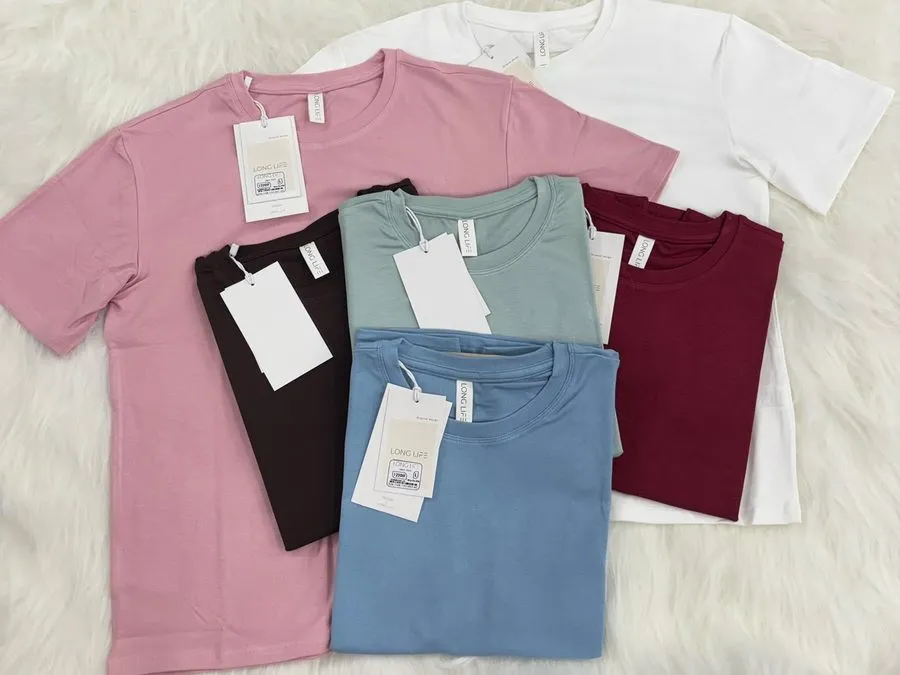
That standard is exactly what factory-direct delivers: 240+ gsm tees and 300–400 gsm fleece, your fit, your label sewn in at source, your packaging. And if you sell to UK/EU fans, Nepal-made merch enters at 0% duty versus 12% on the Chinese-made equivalent — margin nobody at the merch table ever mentions. The duty maths.
POD is for finding out what your audience wants. The moment you know — and a sold-out drop is how you know — every unit you print on demand is margin you chose not to keep.
We produce custom merch — tees, hoodies, sweats — from 200 pieces per style and colour (1,000 per order), with your label, your spec, and a landed quote to compare line-by-line against your POD cost. See what a hoodie really costs, or send us your best-selling design and we’ll price the graduation.
About the author
Santosh Rijal runs Trishakti Apparel, the export knitwear factory his family built on three decades in Nepal’s fashion trade. He writes about sourcing, duty and production from the factory floor in Gaindakot.
LinkedIn ↗