Sourcing · Duty-free
Sourcing knitwear from Nepal: a guide for German & DACH buyers
Germany is already the second-largest market for Nepal’s readymade garments, after the US, and textiles are Nepal’s main export to Germany. Duty-free access under EBA, the certifications DACH buyers expect, supply-chain documentation, and how importing from Nepal works in practice.
If you’re German, you probably know Nepal from the Himalayas, a trekking trip, or the fair-trade felt in your local Weltladen. We are the other Nepal: a full-package knit factory. And the trade lane is less exotic than it sounds: Germany bought about Rs 1.50 billion of Nepali readymade garments in FY 2082/83, second only to the United States, textiles are Nepal’s main export to Germany, and Nepal’s clothing exports to Germany grew 15% that year in rupee terms. Here’s what the knitwear version looks like in practice.
Do German buyers pay import duty on knitwear from Nepal?
No. Nepal-made knit garments enter the EU at 0% import duty under the Everything But Arms scheme, against the 12% MFN rate a Chinese-made garment pays. Origin is self-certified through the REX registered-exporter system, and the EU’s single-transformation rule means cutting and sewing in Nepal is enough — even with imported fabric.
Your German import mechanics stay standard: EORI number, ATLAS declaration, and 19% import VAT which is recoverable as Vorsteuer for VAT-registered businesses — a cash-flow item, not a cost. Full duty details here.
One honest note for Swiss readers: Switzerland is outside the EU and has its own tariff rules, so check the duty position separately; for Swiss buyers our case rests on quality, flexibility, and the compliance story. Austrian buyers are under standard EU rules.
What compliance documents can DACH buyers expect from Trishakti Apparel?
German-speaking buyers ask for certificates first, so we offer OEKO-TEX-certified fabric on request with the mill’s certificate passed through to you, and put test reports, fibre-content documentation, and traceability on the table before we’re asked. Here’s where our compliance stands, stated plainly.
There’s a reason DACH buyers ask first: the region invented the standards. OEKO-TEX was founded in 1992 by the Hohenstein Institute in Germany and Austria’s OETI; GOTS was founded at a conference in Düsseldorf and is headquartered in Stuttgart. A supplier hoping to sell into DACH without engaging with that culture is wasting everyone’s time.
German supply-chain law adds a second layer: under the LkSG, companies with at least 1,000 employees in Germany must run due diligence down their supply chains (a bill to drop the annual report is in parliament and BAFA has stopped reviewing the reports, but the duties still apply), and those documentation demands cascade to every supplier — self-assessments, codes of conduct, audit evidence. A small factory that arrives with its paperwork in order removes exactly the friction that stops most small-factory relationships before they start.
Where do German brands produce, and where does Nepal fit?
German corporate fashion is made across Turkey and Asia. That’s the sourcing map Nepal belongs on: comparable South Asian production, with a duty edge over China and other origins without EU preferences, a genuinely strong social story, and minimums a fraction of what Bangladesh’s mega-factories will accept. Our honest Nepal-vs-alternatives comparison.
Does Trishakti Apparel suit Germany’s promotional-products trade?
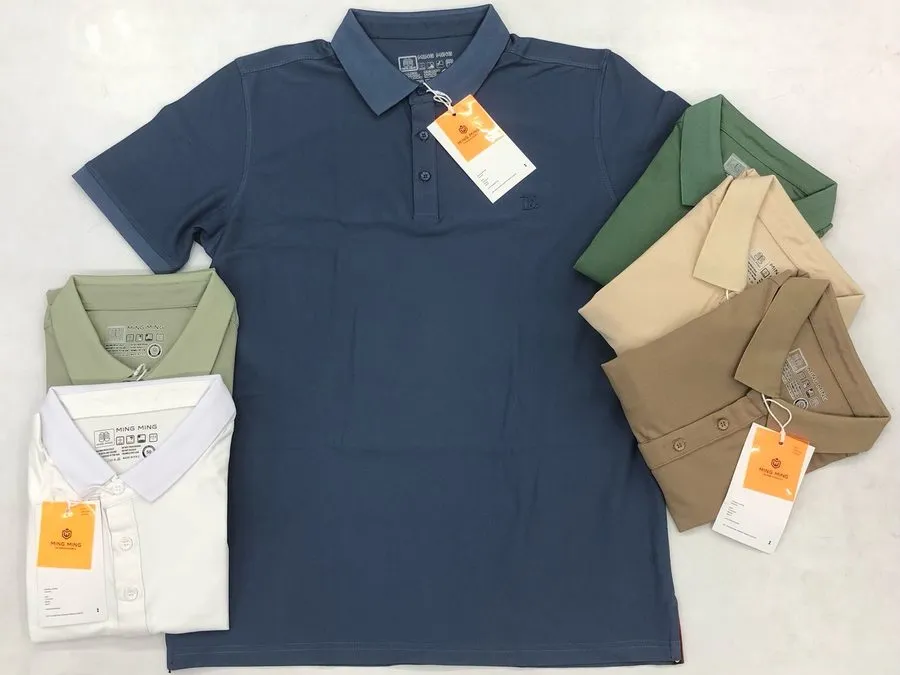
It can. For Germany’s promotional-products trade, textiles are a major product group, and a duty-free, ethically made, low-MOQ knit programme fits buyers who weigh sustainability. We’re happy to talk or send samples well ahead of your next programme. See our guide to buying blanks direct from the factory.
What do German buyers ask about stability, logistics and tariffs?
Three questions come up: whether Nepal is stable, how goods travel from a landlocked country to Hamburg or Rotterdam, and what happens to tariffs after LDC graduation. In short, our operations and deliveries were unaffected by the late-2025 news, sea cargo takes roughly 6–8 weeks from our gate, and EBA continues at least until the end of 2029.
- Stability: Nepal made international news in late 2025; our operations and deliveries were unaffected, and we’ll gladly walk you through our delivery record on a call.
- Logistics: Nepal is landlocked — sea cargo routes via Kolkata to Hamburg/Rotterdam in roughly 6–8 weeks from our gate; samples go by express courier in usually 3–7 days, and urgent runs fly ex-Kathmandu in about a week. We quote FOB or EXW with realistic dates, and we keep them.
- Tariffs after LDC graduation: graduation is scheduled for 24 November 2026 (deferral requested); EBA continues for three years after it takes effect, so at least until the end of 2029, then standard GSP unless Nepal qualifies for GSP+. We’ll state the position plainly at quote time, not after your order.
What MOQ, specifications and payment terms does Trishakti Apparel offer?
Our MOQ is 200 pieces per style and colour, with 1,000 pieces in total per order. GSM, composition, shrinkage and colour-fastness tolerances come on the data sheet as standard, not on request. Payment is on standard exporter terms, staged TT or Letter of Credit, and communication is in English, with replies within 24 hours and direct access to the owner.
- MOQ from 200 pieces per style and colour (1,000 per order) — built for promo programmes, corporate collections, and the trial order we fully expect you’ll want to test us with first.
- Precise specs as standard: GSM, composition, shrinkage and colour-fastness tolerances on the data sheet, not on request.
- Communication in English, replies within 24 hours, with direct access to the owner — not a sales layer.
- Payment on standard exporter terms: staged TT or Letter of Credit. How to pay a new factory safely.
Germany already buys Nepali knitwear — the trade lane, the paperwork, and the duty-free access all exist. What most German buyers haven’t had is a Nepali factory that speaks their compliance language. That’s the gap we built for.
See our knitwear range, or tell us your programme — quantities, target prices, certifications you need — and we’ll reply with a concrete quote and our documentation pack.
About the author
Santosh Rijal runs Trishakti Apparel, the export knitwear factory his family built on three decades in Nepal’s fashion trade. He writes about sourcing, duty and production from the factory floor in Gaindakot.
LinkedIn ↗