Our story · Sustainability
Women at the heart of our factory: why 80% matters
Trishakti Apparel’s production floor is 80% women — meaningful, skilled work paid at or above Nepal’s minimum wage in Gaindakot, Nepal. Here’s what that means for our team, our community, and the buyers who source with us.
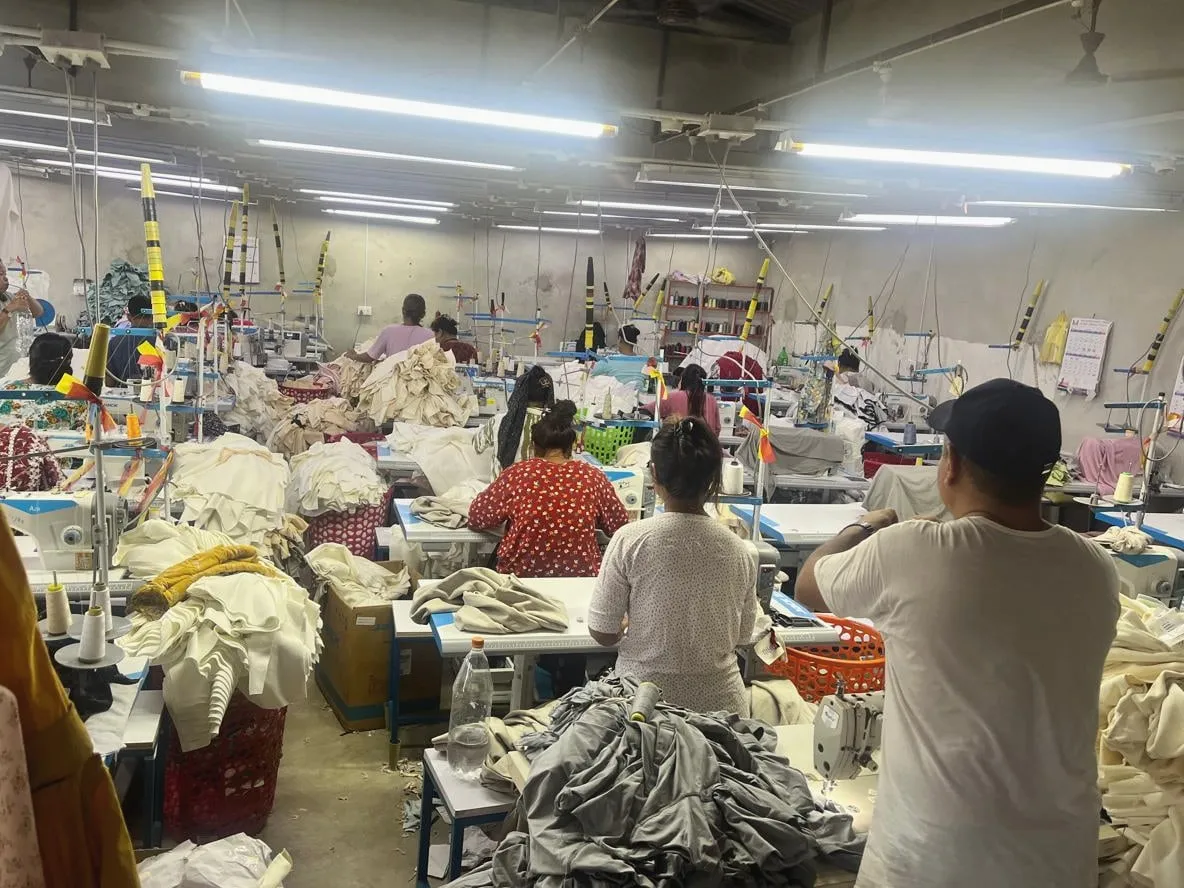
Walk onto our floor in Gaindakot and the first thing you’ll notice is who’s making your garments: 80% of our team are women. That isn’t a marketing line we reverse-engineered for a sustainability page — it’s simply who we are, day in and day out. And it shapes how we think about the work, the people, and the responsibility we carry.
Why does garment work matter for women in Nepal?
For many women in Nepal — especially outside the big cities — a skilled, stable job close to home is genuinely hard to find. Too often the alternative is leaving family behind for uncertain work abroad. A factory job in your own town changes that equation.
It brings a steady income, a skill that grows with you, and the independence and dignity that come with earning your own way, without leaving your children or community.
Garment manufacturing has long been one of the most accessible routes for women into formal, paid, skill-building employment. We take that seriously — the sewing machine is a starting point, not a ceiling.
What does Trishakti Apparel commit to on its own floor?
On our floor in Gaindakot we pay wages at or above Nepal’s minimum wage of NPR 19,550 a month, on time, and commit to safe and respectful working conditions, a strict no-child-labour policy and skill development. Women on our team hold technical and supervisory roles, not only line positions, and the work keeps skills and income in the Gaindakot community.
- Wages at or above Nepal’s statutory minimum (NPR 19,550 a month), paid on time every month.
- Safe, respectful working conditions.
- A strict no-child-labour policy — always.
- Skill development — from sewing to cutting, CAD, quality control, and supervision. Women on our team hold technical and supervisory roles, not only line positions.
- Local employment that keeps skills and income in the Gaindakot community.
Why does this matter to the buyers who source with Trishakti Apparel?
Increasingly, your customers care not just about the garment but about the hands that made it. Sourcing from a factory where women make up around 80% of the team is a real, substantive part of an ethical supply-chain story you can tell honestly — because it’s true, and because you can come and see it for yourself.
This isn’t a certificate on a wall; it’s the actual composition of the people making your order.
We’re a young factory, building responsibly from the ground up. We’d rather tell you plainly what’s true today — like our 80% — than claim badges we haven’t yet earned.
This is central to how we see our work: good garments and good livelihoods aren’t a trade-off. Read more about how we make responsibly, or come and meet the team.
About the author
Santosh Rijal runs Trishakti Apparel, the export knitwear factory his family built on three decades in Nepal’s fashion trade. He writes about sourcing, duty and production from the factory floor in Gaindakot.
LinkedIn ↗